
Short answer
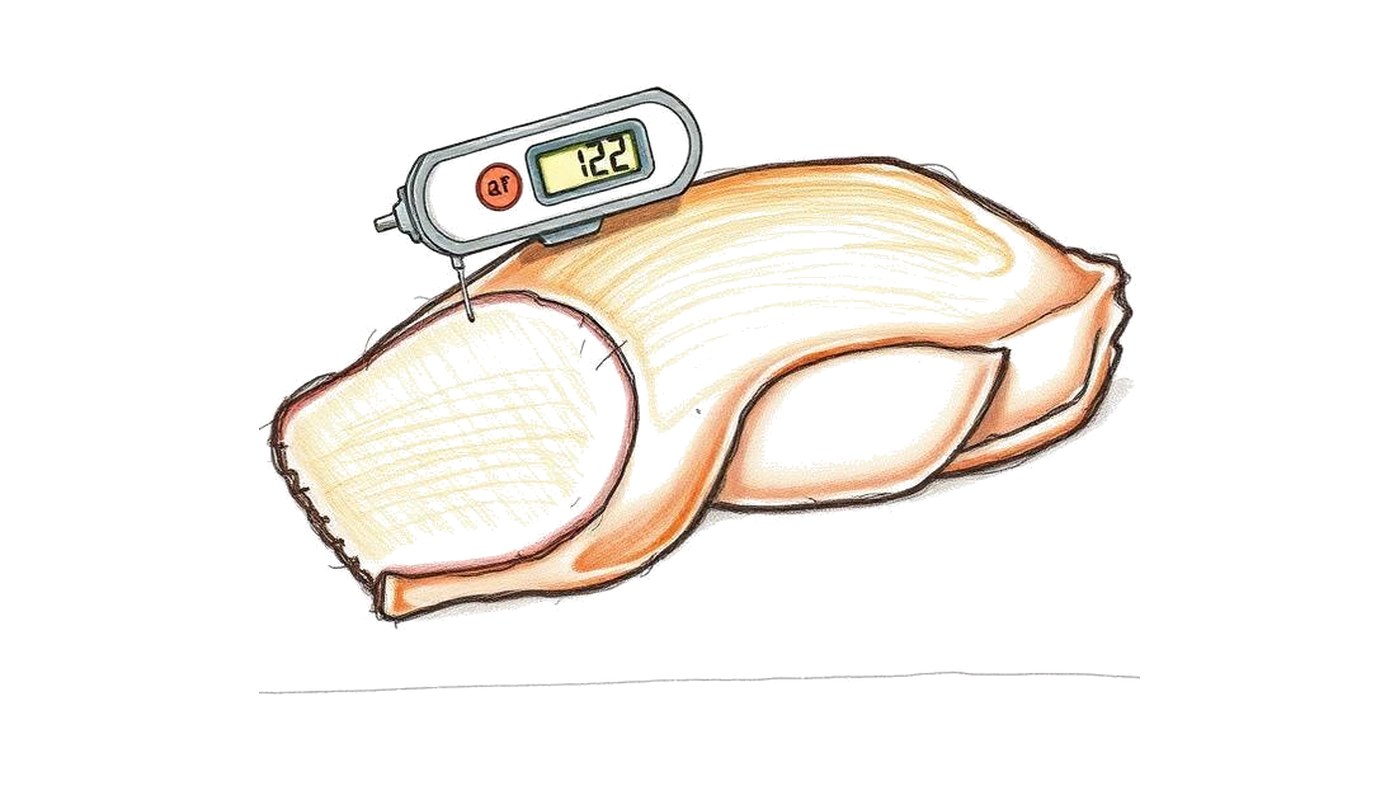
Pull duck breast at 130–135°F (54–57°C) in the centre for the rosy, medium-rare finish restaurants serve, then rest five minutes while carryover takes it a few degrees higher. Cook it to 165°F (74°C) if you want the official poultry safety minimum, accepting a firmer, greyer centre. Measure into the thickest part from the side, never through the skin.
Two different numbers, two different jobs
Duck breast temperature guidance splits into two categories that get conflated constantly: a food-safety minimum set by USDA, and a set of culinary conventions used to hit a particular texture. They answer different questions. The safety number answers "is this free of the pathogens poultry can carry." The culinary numbers answer "what texture am I aiming for," and assume you accept the trade-offs that come with a lower-temperature centre.
Doneness table: pull temperature, final temperature, appearance
"Pull temperature" is the internal reading at which you take the breast off the heat. "Final temperature" is what it reaches a few minutes later, after carryover cooking has run its course during the rest. The gap between the two is carryover, covered in detail below.
| Target | Pull temp | Final temp (after rest) | Appearance | Texture | Category |
|---|---|---|---|---|---|
| Rare | 115–120°F (46–49°C) | 120–125°F (49–52°C) | Deep red throughout, very soft | Very tender, almost yielding | Culinary convention only — not a USDA-recognised safe endpoint |
| Medium-rare | 125–130°F (52–54°C) | 130–135°F (54–57°C) | Rosy pink centre, browned edges | Tender, moist, the common restaurant target | Culinary convention only |
| Medium | 135–140°F (57–60°C) | 140–145°F (60–63°C) | Pale pink centre | Firmer, still moist | Culinary convention only |
| Well done / USDA safe minimum | 160°F (71°C) | 165°F (73.9°C) or above | No pink, opaque throughout | Firm, denser, more prone to drying if overshot | Meets USDA's 165°F minimum internal temperature |
Pull temperatures assume you rest the breast for 5–8 minutes afterward. If you plan to serve immediately with no rest, pull closer to your final target instead.
Duck temperature beyond the breast: legs, thighs and whole bird
Breast is the only cut people cook to a rosy centre. Everywhere else on the duck, the useful target sits well above the safety minimum, because legs and thighs are worked muscle that only turns tender once collagen has broken down.
| Cut | Useful target | Why that number |
|---|---|---|
| Duck breast | 130–135°F (54–57°C) final, or 165°F (73.9°C) for the safety minimum | A few degrees decide rosy versus grey; see the table above |
| Whole duck, thigh | 175–185°F (79–85°C) | Above the 165°F minimum by choice — the legs only pull easily once connective tissue softens |
| Duck legs, confit | Fat held at 190–210°F (88–99°C) until a skewer meets no resistance | Texture, not temperature, is the endpoint; the meat passes 165°F long before it is tender |
For the timings that get a bird to those numbers, see whole duck cooking time by weight and the two-stage roasted whole duck recipe. For legs, the duck leg confit method explains why the fat temperature matters more than the clock. If you are finishing breast in the oven rather than the pan, the oven-roasted duck breast recipe uses the same pull temperatures.
Why carryover varies by thickness and pan heat
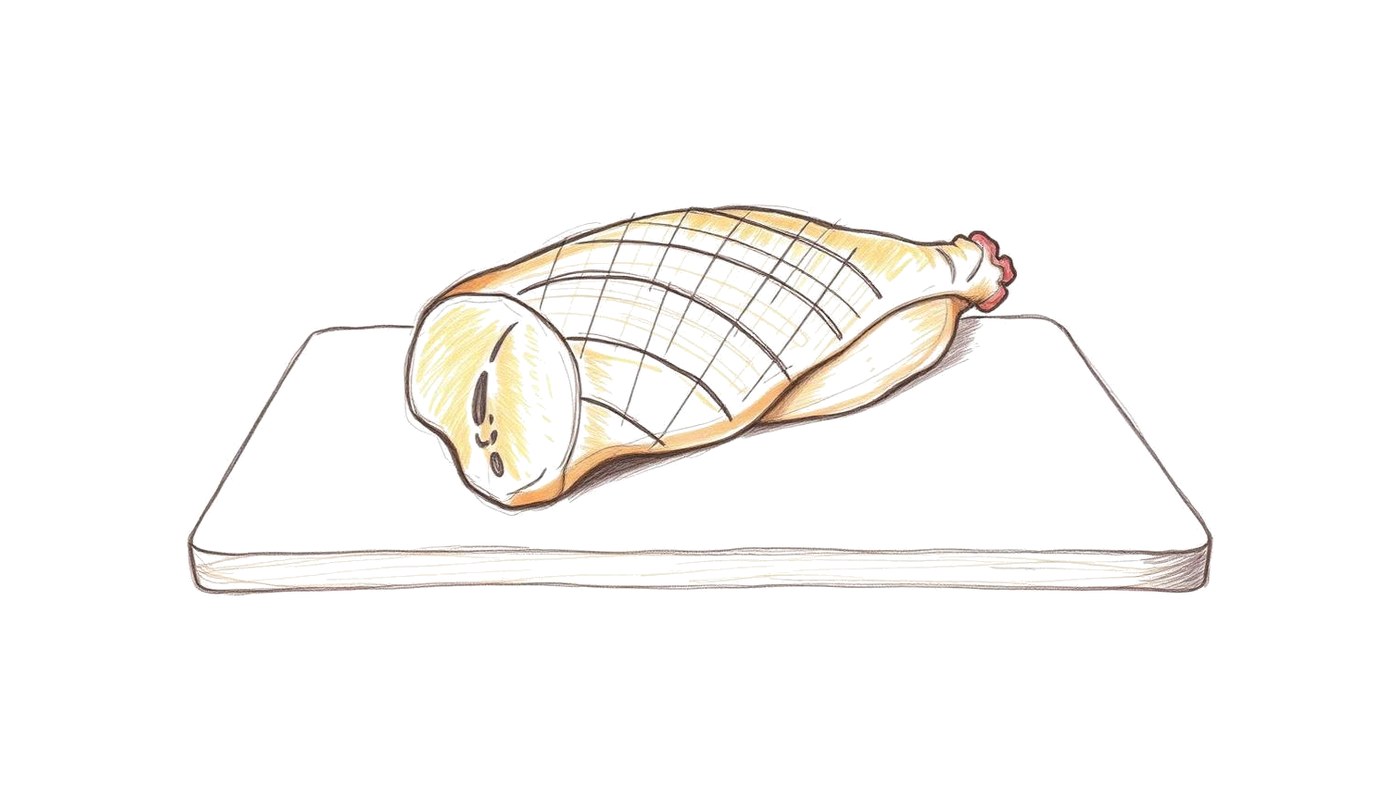
Carryover cooking happens because the outer layers of the meat are hotter than the centre at the moment you stop applying heat, and that heat keeps migrating inward while the surface cools. The size of the effect depends mainly on two things: how thick the cut is, and how hot the outer layers got before you pulled it.
A thick magret duck breast (350–450 g / 12–16 oz) holds more residual heat in its outer layers relative to its core, so it can carry over 8–10°F (4.5–5.5°C) after leaving the pan. A smaller Pekin breast (150–200 g / 5–7 oz) carries over less, often only 4–6°F (2–3°C), because there's less thermal mass storing heat near the surface. A breast finished over high, aggressive heat also tends to carry over more than one finished gently, because the temperature gradient between surface and centre is steeper.
Probe placement: where readings go wrong
Insert the thermometer through the side of the breast, horizontally, so the tip sits in the geometric centre of the thickest part. Three placement mistakes produce misleading readings:
- Through the fat cap. Fat conducts and holds heat differently from muscle, so a probe that passes through the fat layer before reaching meat gives a reading skewed toward the fat's temperature, not the meat's.
- Touching the pan. Probing straight down from the top risks the tip grazing the pan surface, which reads far hotter than the meat around it.
- Off-centre toward a thin edge. Duck breast tapers; a probe placed near the thin end reads higher than the true thickest-point temperature and can undercook the centre.
Thermometer error and rest time
Consumer instant-read thermometers commonly carry a manufacturer-stated accuracy of ±1–2°F (±0.5–1°C), and that error compounds with any probe misplacement above. Given that duck breast doneness bands are often only 5–10°F wide, a small placement or calibration error can shift a reading from one doneness category into the next. Treat a single reading as an estimate and re-check in a second spot if the number looks surprising. If you are choosing a probe, our thermometer guide for duck covers the side-probe access and response speed that matter for a breast, and the pan-seared duck breast recipe shows where these readings fall in the actual cook.
Rest time matters independently of carryover: beyond letting temperature finish rising, resting allows juices compressed toward the centre during cooking to redistribute, so a breast sliced immediately off the pan loses more juice onto the board than one rested 5–8 minutes first.
Why 'pink is fine' is a culinary claim, not a safety one
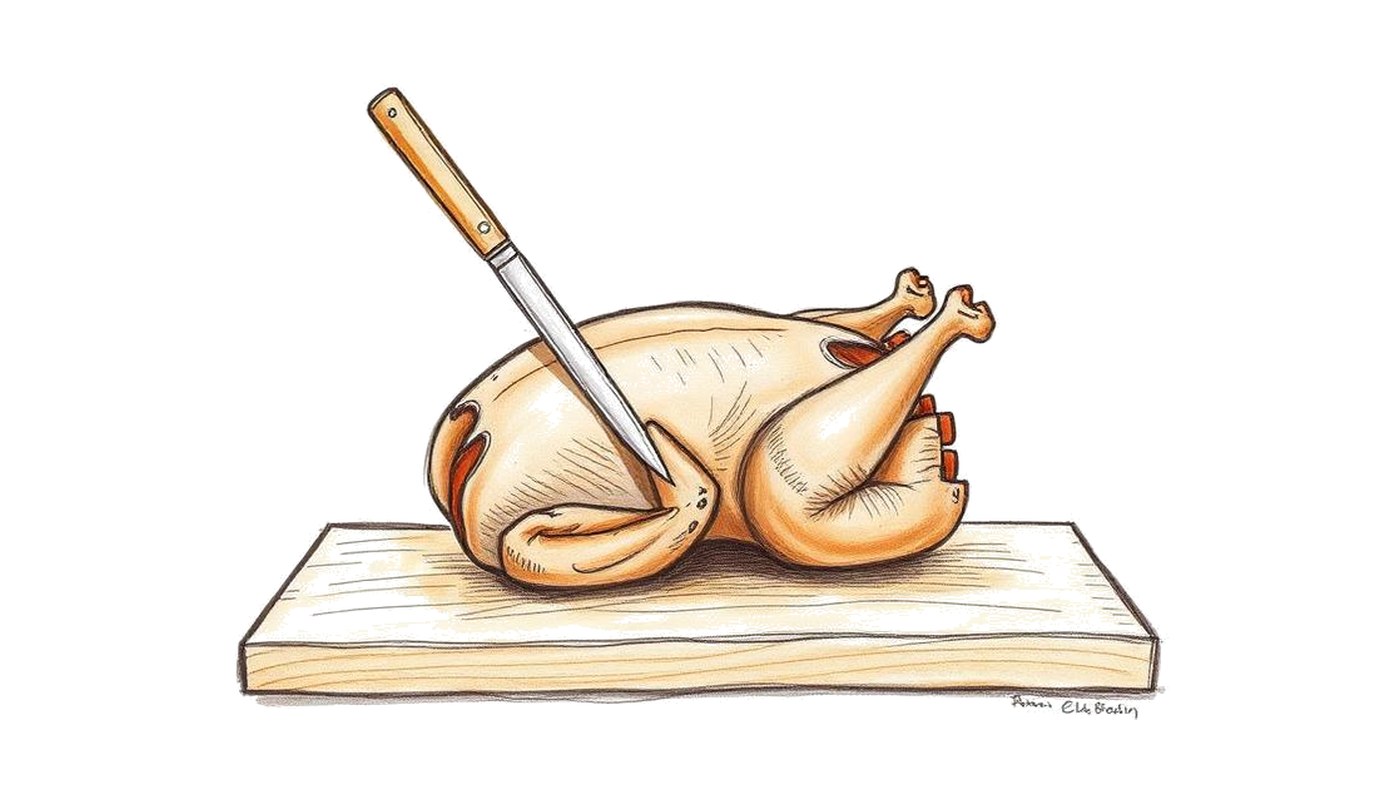
Duck breast served pink at 130–135°F is a texture choice with a long history in restaurant kitchens, built on the assumption of quality sourcing, proper handling, and quick cooking that limits surface contamination exposure. It is not equivalent to a safety clearance. USDA's poultry guidance does not carry a "pink is acceptable" exception for duck the way, for example, whole-muscle beef has one for rareness. Color is also an unreliable proxy for either safety or doneness on its own — cure, added ingredients, and myoglobin variation between birds can make cooked duck look pinker or paler than its actual internal temperature would suggest.
The practical takeaway: treat 165°F as the number that removes the safety question entirely, and treat anything below it as a deliberate trade you're making for texture — one worth reconsidering for very young, elderly, pregnant, or immunocompromised diners.
Common questions
- What internal temperature should duck breast be?
- Two answers, for two questions. The USDA safe minimum for poultry, duck included, is 165°F (73.9°C). The common restaurant target is medium-rare: pulled at 125–130°F (52–54°C), finishing at 130–135°F (54–57°C) after a 5–8 minute rest — a texture convention, not a safety clearance.
- What internal temperature is duck cooked at, beyond the breast?
- 165°F (73.9°C) is the safe minimum for every part of the bird. Beyond that, targets follow texture: duck legs and the thigh of a whole bird are usually taken to 175–185°F (79–85°C), where connective tissue has softened and the meat pulls easily, and confit legs sit in fat held at 190–210°F (88–99°C) until a skewer meets no resistance.
- What temperature is medium duck breast?
- Pull at 135–140°F (57–60°C) and it settles at 140–145°F (60–63°C) after resting, giving a pale pink centre that is firmer than medium-rare but still moist.
- Is pink duck breast safe to eat?
- Pink at 130–135°F is a texture choice, not a safety endpoint. Only 165°F (73.9°C) removes the safety question, and colour is an unreliable proxy for doneness in either direction. Cook to 165°F for very young, elderly, pregnant, or immunocompromised diners.
- How much does duck breast carry over while resting?
- A thick magret breast (350–450 g) can climb 8–10°F (4.5–5.5°C) off the heat; a smaller Pekin breast (150–200 g) usually climbs only 4–6°F (2–3°C). Hard, fast cooking increases carryover because the surface-to-centre gradient is steeper.
- Where do you put the thermometer in a duck breast?
- Through the side, horizontally, with the tip in the geometric centre of the thickest part. Probing down through the fat cap, touching the pan, or landing near the tapered thin edge all read high and can leave the centre undercooked.
References
- Safe Minimum Internal Temperature Chart — USDA Food Safety and Inspection ServiceAll poultry, including duck and duck pieces, is listed at a 165°F (73.9°C) safe minimum internal temperature.Reference checked 2026-08
- Duck and Goose from Farm to Table — USDA Food Safety and Inspection ServiceHandling, labelling, storage and cooking guidance specific to duck and goose.Reference checked 2026-08
The tools these numbers assume
Every target on this page assumes you can read the temperature quickly and in the right spot.
- Best thermometer for duck
Which type suits the cook you do most, and the specifications that decide it.
- Best pan for duck breast
Carryover and render behaviour both change with the pan you are cooking in.
These same pull temperatures decide an air fryer cook, where timings shift between machines and the probe is all you have. Air fryer duck breast
Related guides
- How to Cook Duck BreastThe cold-pan method, why it works, and how to rescue it when it doesn't.
- Interactive Duck Doneness GuideTargets, probe placement and carryover by cut and method.
- Best Thermometer for DuckInstant-read or leave-in? Match the tool to how you cook duck.
- Whole Duck Cooking TimePlan by weight, finish by thermometer — and why the two never fully agree.
- Pan-Seared Duck BreastScore, render cold, and finish hot for shatteringly crisp skin over a rosy, evenly cooked centre.
- Oven-Roasted Duck BreastDuck breast rendered in a skillet and finished in the oven — the steadier route to crisp skin and an even rosy centre when you are cooking four or more.
- What Does Duck Taste Like?Closer to steak than chicken — and why fat, not gaminess, drives the flavour.
- How to Score Duck BreastDepth, pattern and knife control — the 90 seconds that decide your skin.