
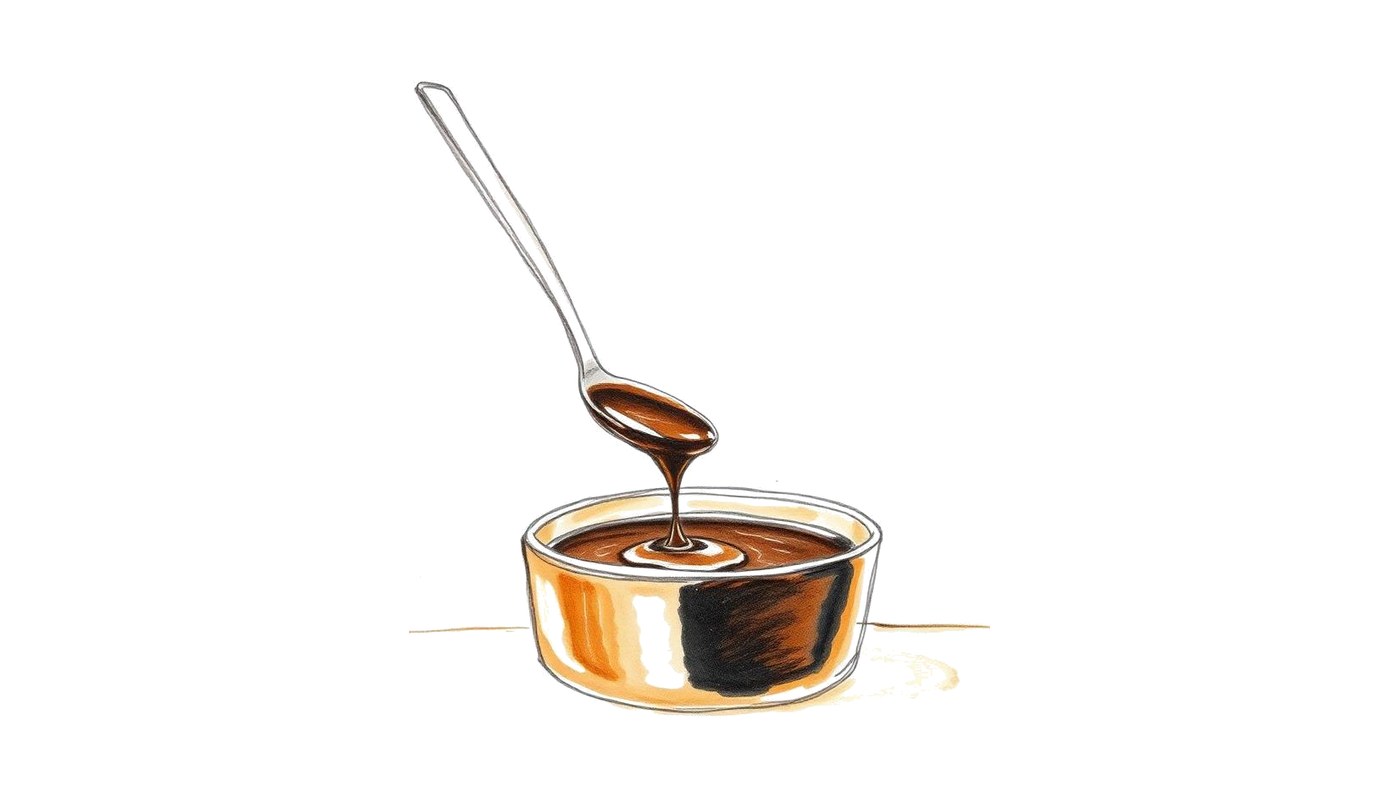
Why organise by flavour family, not by recipe
Duck breast's dominant characteristic at the table is rendered fat and rich, slightly mineral-tasting muscle. Nearly every sauce that works with it is doing one of a small number of jobs: cutting the fat with acid or sweetness, deepening the meat's own flavour with reduction, adding savoury weight, contrasting it with heat, or lifting it with something bright and green. Thinking in families rather than fixed recipes lets you build a sauce from what's in the kitchen, matched to how the duck was cooked.
1. Fruit and acid
Fruit-and-acid sauces — orange, cherry, blackberry, pomegranate, balsamic-fruit reductions — work because acidity and fruit sugars cut through duck fat the way they cut through any rich meat, resetting the palate between bites. They flatter pan-seared, cold-pan breast especially well, since the fond left in the pan after searing gives the fruit reduction a savoury backbone rather than tasting purely sweet.
Build logic in general terms: a fruit component (juice, purée, or whole fruit), an acid if the fruit itself isn't sharp enough (vinegar or citrus), a small amount of sugar or honey only if the fruit is tart, and stock or pan fond for savoury depth. Reduce until it coats a spoon rather than runs off it.
Pan material: acidic reductions can react with unseasoned cast iron and pick up a metallic edge over long simmering, so finish acid-heavy sauces in stainless steel or enamelled cookware rather than bare cast iron.
Pitfall: over-reducing turns these sauces cloyingly sweet and sticky; pull them while still pourable, since they thicken further as they cool.
2. Wine reduction
Red wine, port, or Madeira reductions built on the pan fond from a seared or roasted breast deliver savoury depth and tannic structure that plays well against duck's fat content — the tannin does some of the same cutting work as acid, just with more body and less brightness. These suit both pan-seared and roasted whole-duck breast, since they rely on real fond, and a hard sear produces more of it than a gentle poach would.
Build logic: deglaze the fond with wine, reduce by roughly half to concentrate it, enrich with stock, reduce again to a sauce consistency, and finish off the heat with a small knob of butter or a spoon of the duck's own rendered fat for shine and body.
Pan material: use the same pan the duck was seared in — that's the point of building the sauce, since the fond is the flavour base. A seasoned cast-iron pan handles a short wine reduction fine as long as it isn't left simmering acidic liquid for an extended period.
Pitfall: reducing wine without also reducing stock leaves the sauce thin and sharply alcoholic-tasting; both need to concentrate together.
3. Savoury and umami
Mushroom, soy-based, miso, or demi-glace-style sauces add depth without competing for sweetness or acidity, which suits duck cooked plainly — simply seared and rested, with the sauce doing most of the flavour work. This family is forgiving of home stovetop technique since it doesn't rely on a dramatic fond the way a wine reduction does.
Build logic: a concentrated savoury base (reduced stock, soy, or a mushroom infusion), balanced with a small amount of acid or sweetness to keep it from tasting flat, and finished with fat for texture.
Pan material: stainless or non-stick works well; soy- and miso-based sauces can scorch and stick in cast iron because of their sugar content, so keep heat moderate.
Pitfall: too much reduced soy or miso pushes the sauce toward salty and one-dimensional; balance with acid or a neutral stock addition before serving.
4. Pepper and spice
Green peppercorn, five-spice, or chile-forward sauces contrast rather than cut duck's fat — the heat and spice register as a separate sensation alongside the richness instead of neutralising it. These flatter breast finished hot and fast, including wild duck breast, where the leaner meat can otherwise taste plain without a bold counterpoint.
Build logic: bloom whole or cracked spice in a little fat first to open its aromatics, deglaze with a splash of cream, stock, or brandy depending on the direction, and reduce briefly — these sauces generally want less cooking time than a wine reduction, since overcooking dulls the spice's top notes.
Pan material: any heavy pan works; the main risk is scorching whole spices over too-high heat rather than a material issue.
Pitfall: adding cream to a very hot, acidic pan can cause it to split; pull the pan off direct high heat before adding dairy.
5. Bright and herbal
Salsa verde, chimichurri, or herb-and-citrus oils are uncooked or barely cooked, and they work by contrast in temperature and freshness rather than by reduction — cold, sharp, and green against warm, rich duck. These suit any cooking method but particularly benefit simply cooked breast where the duck itself is the main event and the sauce is a garnish rather than a coating.
Build logic: chopped fresh herbs, an acid (vinegar or citrus), oil to bind, and something sharp like capers, shallot, or mustard for edge. No reduction, no cooking — mix and rest briefly so flavours combine.
Pan material: not applicable; these are built off the stove.
Pitfall: made too far ahead, herb-based sauces oxidise and dull in colour and flavour; make close to serving.
Sauce family, method and occasion at a glance
| Sauce family | Best cooking method | Typical occasion |
|---|---|---|
| Fruit & acid | Pan-seared cold-pan breast | Dinner party, holiday |
| Wine reduction | Pan-seared or roasted whole duck | Dinner party, holiday |
| Savoury / umami | Simply seared or roasted | Weeknight, dinner party |
| Pepper & spice | Hot-and-fast sear, wild duck | Weeknight, casual entertaining |
| Bright & herbal | Any method | Weeknight, warm-weather entertaining |
Duck Matchmaker
A starting point for matching sauce family to how the duck was cooked and who's at the table.
Fruit & acid (orange, cherry, pomegranate)
- Sauce
- Reduced with pan fond, finished with a little butter
- Sides
- Roasted root vegetables, wild rice
- Occasion
- Holiday centrepiece
Wine reduction (red wine, port, Madeira)
- Sauce
- Built on fond, enriched with stock and butter
- Sides
- Potato gratin, braised greens
- Occasion
- Dinner party
Savoury / umami (mushroom, miso)
- Sauce
- Reduced stock base with a splash of acid
- Sides
- Simple grains, roasted mushrooms
- Occasion
- Weeknight
Pepper & spice (green peppercorn, five-spice)
- Sauce
- Bloomed spice, deglazed with cream or brandy
- Sides
- Steamed rice, stir-fried vegetables
- Occasion
- Casual entertaining
Bright & herbal (salsa verde, chimichurri)
- Sauce
- Uncooked herb-acid-oil blend
- Sides
- Grilled vegetables, simple salad
- Occasion
- Warm-weather weeknight
Related guides
- What to Serve With Duck BreastA side-dish matrix built from your sauce, your season and your occasion.
- How to Cook Duck BreastThe cold-pan method, why it works, and how to rescue it when it doesn't.
- Why Duck Skin Won't CrispSeven symptoms, seven causes, and the fix you can still apply mid-cook.
- Why Orange Works With DuckZest, acid and bitterness — the three levers that keep it from cloying.
- Cherry, Plum & Stone Fruit With DuckFruit acidity, tannin and sugar matched to the way you cooked the duck.
- The Best Acids for DuckWhy acid does more for duck than any other seasoning decision.
- Duck à l’OrangeA whole duck roasted in two stages, served with a bitter-orange gastrique built from the pan drippings — sharp and glossy rather than sweet.
- Smoked Duck with Plum SauceGentle smoke, careful temperature control, and a sharp-sweet plum reduction to cut the richness.
- How to Cook Wild Duck BreastA decision tree for lean, unpredictable birds — skin on or off.
- Duck MarinadesWhen a marinade earns its place — and when it just softens your skin.
- What Does Duck Taste Like?Closer to steak than chicken — and why fat, not gaminess, drives the flavour.