
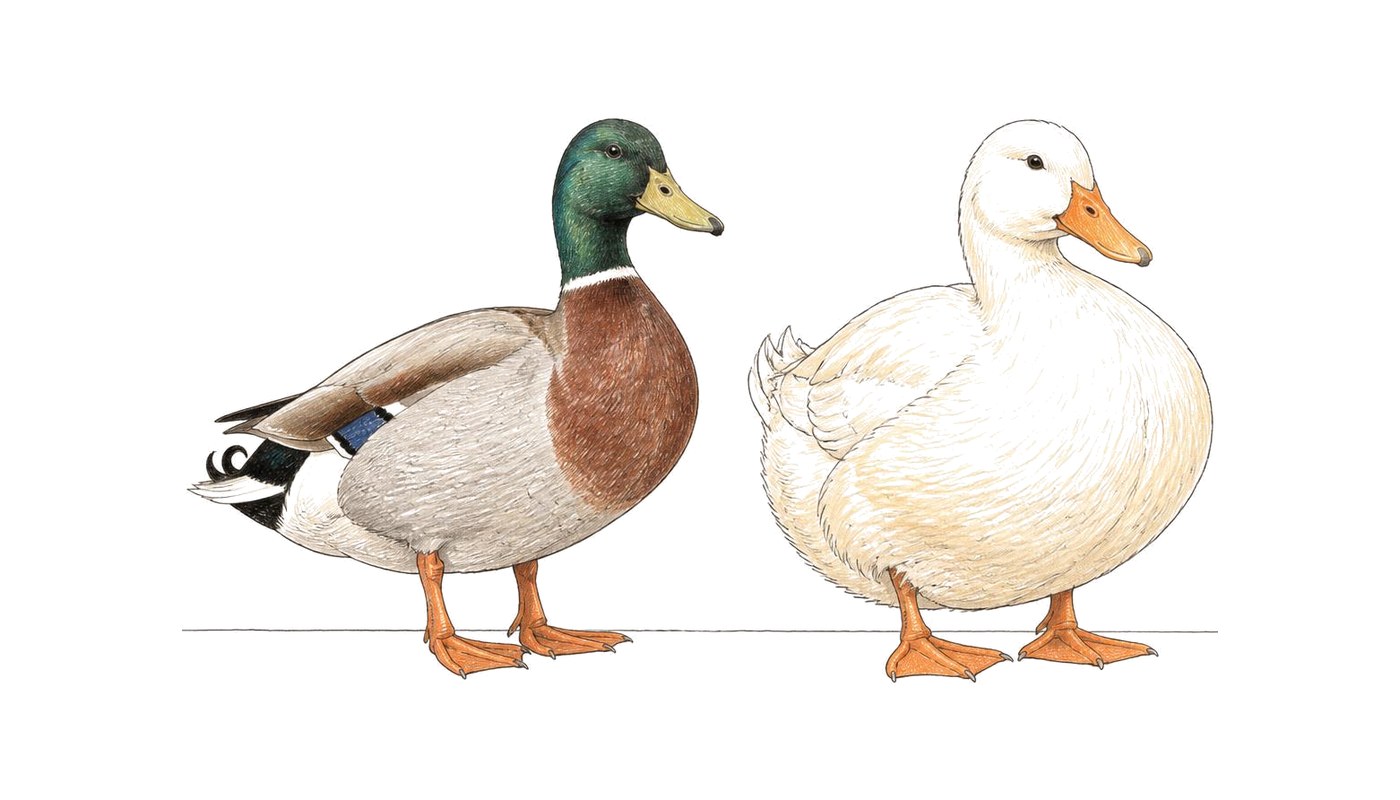
Assess the bird before you decide anything
Every wild duck breast is a different cooking problem until you've actually looked at it. Before choosing a method, check:
- Fat cover. Press the skin — if there's a visible, even layer of fat under it, you have more room for a slower sear. If the skin sits almost directly on the muscle, treat it as very lean.
- Size. A teal breast might be under 100 g; a mallard breast can run 150–200 g. Smaller pieces cook through in less time and need closer attention.
- Shot damage. Check for embedded shot and bruised, blood-shot tissue. Trim damaged areas away — they cook and taste differently from clean muscle.
- Age. Older birds tend to have tougher muscle fibre. If you can't tell, treat unfamiliar birds as potentially tougher and avoid pushing past medium doneness by culinary convention, even briefly.
Skin-on or skinless: a decision tree
- Is there a usable fat layer under the skin? If yes, keep the skin on and score it lightly — it can still crisp, just faster than a farmed duck's thicker cap.
- Is the skin very thin with almost no fat beneath it? Skin-on won't crisp meaningfully and will mostly just chew rubbery. Consider removing it and searing the meat directly in a little added fat or butter instead.
- Is the skin damaged, torn, or heavily bruised from the shot? Remove it — damaged skin won't render evenly or look appetising, and there's no upside to leaving it on.
Hot-and-fast versus the cold-pan approach
The cold-pan method used for farmed duck breast — starting skin-side down in an unheated pan and letting a thick fat cap render slowly over 8–10 minutes — depends entirely on that fat layer buffering the meat from the pan's heat while it renders. A lean wild breast has little or no such buffer. Put it in a cold pan and by the time any fat has rendered, the thin muscle underneath has already overcooked.
Instead, get the pan properly hot first — medium-high, with a light film of fat or butter already shimmering — and sear the breast quickly on each side, typically 2–4 minutes per side depending on thickness, adjusting for size. The goal is a well-browned exterior before the thin interior has a chance to overshoot.
Adding fat or butter to the pan
Because wild duck breast usually can't render enough of its own fat to cook in, add a tablespoon of neutral oil, rendered duck fat, or butter to the pan before searing. This protects the lean meat from sticking and scorching, and helps the exterior brown before the inside overcooks. Basting with butter and aromatics in the final minute adds flavour without extending cook time.
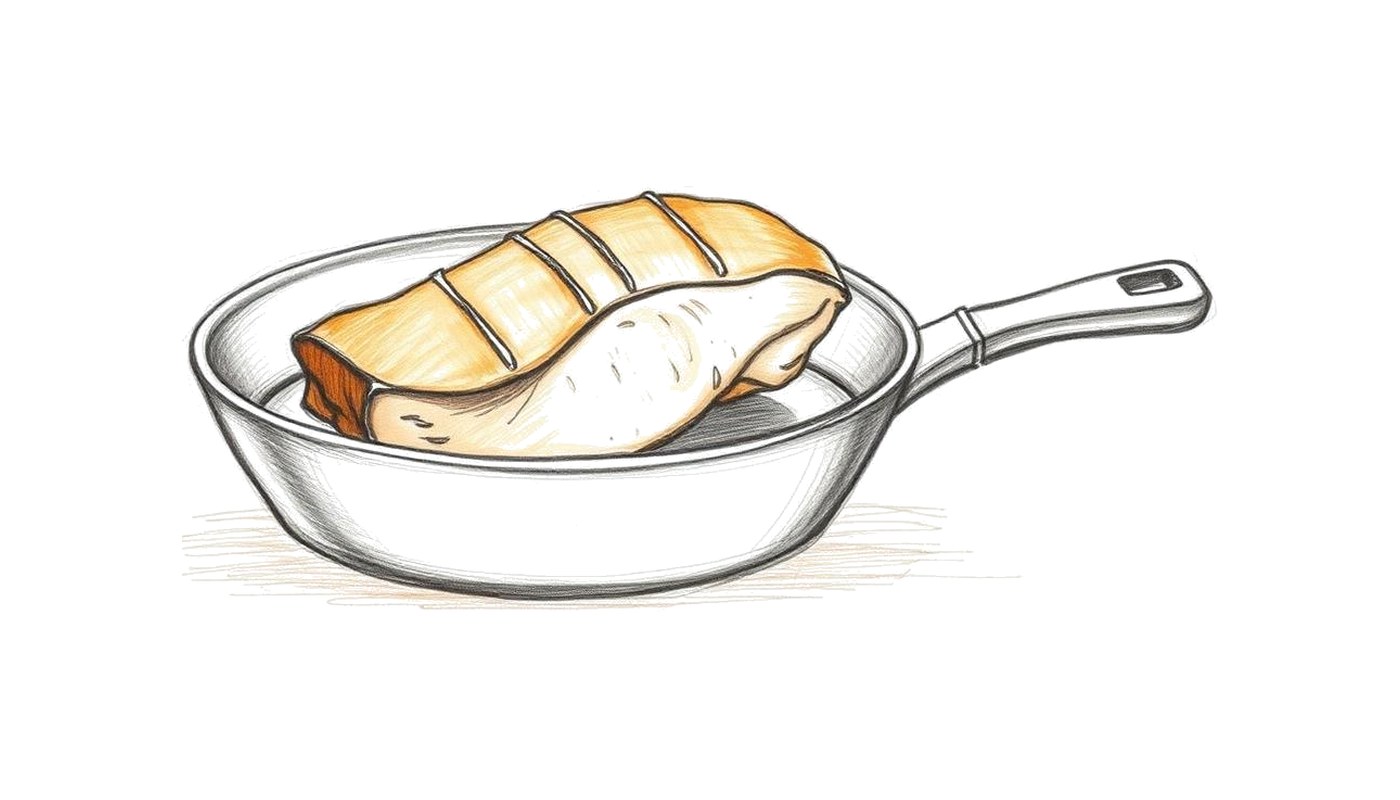
Pat dry and season
Blot the surface dry so it sears instead of steams, then season generously with salt just before cooking.
Heat the pan properly first
Bring a heavy pan to medium-high with a thin film of added fat, until it shimmers. Do not start in a cold pan.
Watch for A pan that isn't hot enough will let the breast sit and lose moisture without browning.
Sear both sides briskly
Cook 2–4 minutes per side depending on thickness, turning once the first side is well browned.
Check with a thermometer, not a clock
Probe the thickest part. Pull the pan a few degrees before your target to account for carryover cooking.
Watch for Thin breasts can climb 5–10°F after leaving the pan — pull earlier than you would for a thicker farmed breast.
Rest on a warm plate
Rest 4–5 minutes loosely tented. A cold plate pulls heat out of an already-thin cut faster than you want.
Slice thin, against the grain
Thin slices cut across the muscle fibres are easier to chew on a leaner, denser cut than a farmed breast.
What marinades and brines can and can't do
A brief marinade or a short brine can season the meat and, in the case of a brine, help it hold a little more moisture through cooking. Both are worth using on a lean bird for that reason. What they cannot do is rescue a breast that's already been overcooked, and they cannot meaningfully tenderise genuinely tough muscle from an older bird — that's a texture problem rooted in the muscle fibre itself, and no amount of soaking reverses it after the fact. If a bird is likely tough, braising or slow, moist cooking suits it better than a quick sear regardless of what it's been marinated in.
Quack Fix: wild duck breast problems
Livery or overly strong flavour
- Likely cause
- Blood-shot tissue near shot damage wasn't trimmed, or the bird's diet leaned heavily toward strong-flavoured foraging.
- Fix now
- Trim away any dark, bruised tissue before cooking the next piece; a bold pan sauce with acid or fruit can also balance a strong flavour already on the plate.
- Prevent next time
- Inspect and trim breasts thoroughly before cooking, and expect diet-driven variation between birds.
Dry and grey throughout
- Likely cause
- Overcooked past a safe target due to a cold-pan start or ignoring carryover.
- Fix now
- Slice thin and serve with a sauce to add moisture back; there's no way to rehydrate the meat itself.
- Prevent next time
- Sear hot and fast, pull a few degrees early, and rest before slicing.
Tough, chewy texture
- Likely cause
- An older bird's denser muscle fibre, or meat sliced with the grain instead of against it.
- Fix now
- Slice thinner across the grain if it hasn't been sliced yet — this alone significantly improves how tough meat eats.
- Prevent next time
- Slice thin against the grain, and consider braising instead of searing for birds you suspect are older.
Skin refuses to crisp
- Likely cause
- Not enough fat under the skin to render, or the pan wasn't hot enough when the breast went in.
- Fix now
- Remove the skin before serving if it's not crisping — rubbery skin adds nothing.
- Prevent next time
- Assess fat cover before deciding to cook skin-on at all; thin-skinned birds are often better served skinless.
Common questions
- Should I brine every wild duck breast?
- It's optional and helps most on very lean birds where moisture retention matters. A short 30–60 minute brine is enough; longer doesn't meaningfully improve results and can oversalt a small cut.
- Is it safe to cook wild duck breast to a lower temperature like farmed duck breast?
- The USDA minimum of 165°F (73.9°C) applies to duck regardless of source. Culinary conventions for lower temperatures on farmed duck breast are a chef's practice, not a food-safety recommendation, and wild-harvested birds carry their own handling considerations worth taking seriously.
Related guides
- Wild Duck vs Farmed DuckWhy farmed-duck technique fails on a wild bird — and what to change.
- Duck Breast Temperature & DonenessWhat the numbers mean, and where safety guidance and kitchen practice differ.
- Best Thermometer for DuckInstant-read or leave-in? Match the tool to how you cook duck.
- Best Sauces for Duck BreastFive sauce families, and which cooking method each one flatters.
- Pan-Seared Duck BreastScore, render cold, and finish hot for shatteringly crisp skin over a rosy, evenly cooked centre.
- Duck MarinadesWhen a marinade earns its place — and when it just softens your skin.