
Short answer
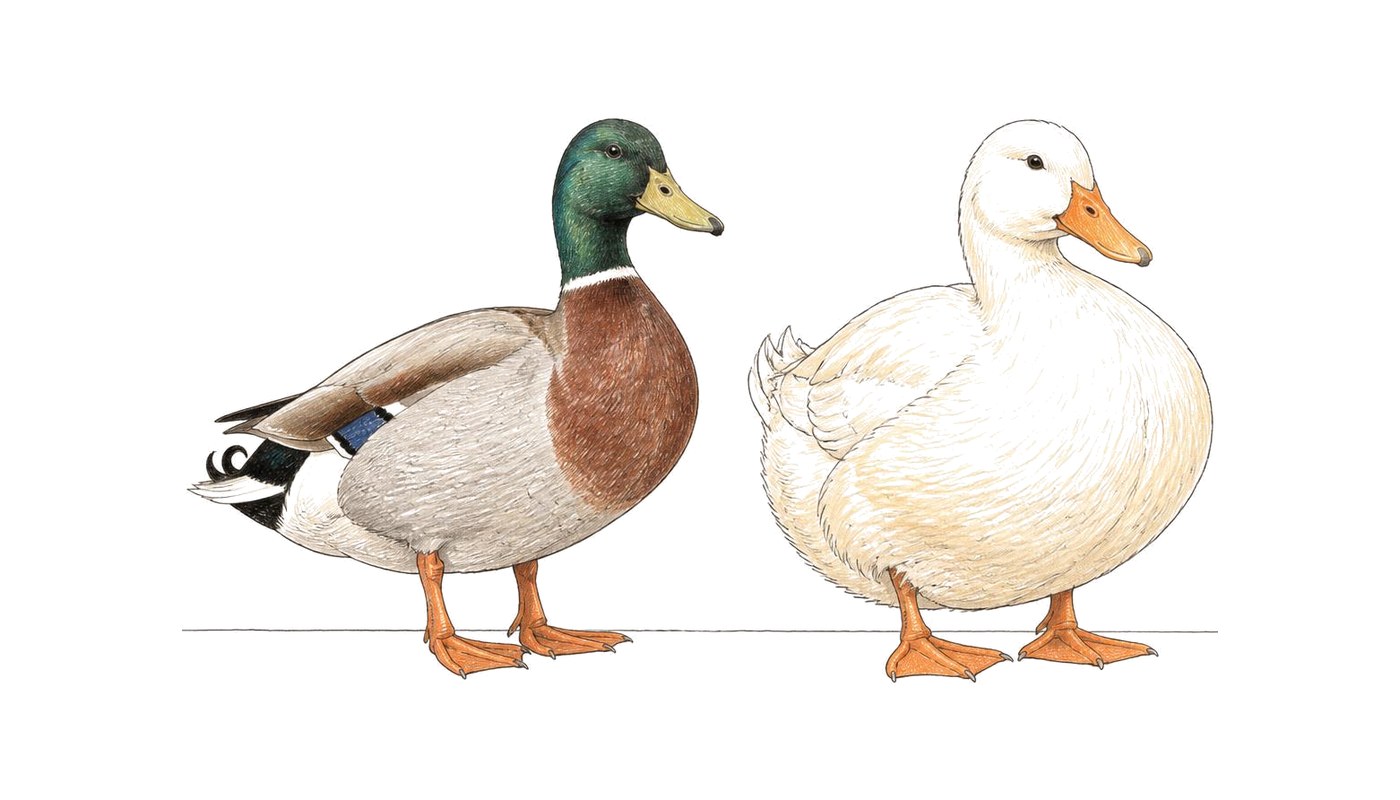
Wild duck is leaner, darker, and much more strongly flavoured than farmed duck, with almost none of the fat cap that makes farmed breast forgiving. Cook wild breast fast and hot to medium-rare; save the low, patient rendering for farmed birds.
Fat cover: the biggest difference
Farmed breeds raised for the table — Pekin and Moulard chiefly — are selectively bred and fed to carry a thick, even subcutaneous fat cap under the skin, often 1 cm (nearly ½ in) or more over the breast. That fat layer is what makes the cold-pan searing method work: it gives the pan something to render slowly while the skin crisps.
Wild ducks, by contrast, are working animals that fly long distances and forage for their own food. Many carry only a thin fat layer, and it varies enormously bird to bird depending on species, season, and how recently they'd been feeding heavily before being taken. Some wild ducks — particularly late-season birds that have been feeding on grain — can carry surprising amounts of fat; others carry almost none. Assume nothing and check the actual bird in front of you.
Muscle use and myoglobin
Wild ducks use their breast muscles constantly for sustained flight, which builds far more myoglobin into the tissue than a farmed duck that walks short distances between feeders. Myoglobin is what gives meat its deep red colour and much of its iron-forward flavour — it's why wild duck breast reads as darker and more intensely "gamey" than a farmed one, even before any diet differences are considered. That dense, well-worked muscle is also proportionally leaner and can toughen faster if it's overcooked, since there's less intramuscular fat to buffer against dryness.
Species and diet: expect variability
"Wild duck" covers many species with real differences, and even within a species, individual birds vary with age, season and location. As a rough orientation only:
- Dabbling ducks (mallard, teal, wigeon) feed at the surface and in fields, often on grain, seeds and aquatic plants. They tend toward milder flavour, though this varies with what's locally available to them.
- Diving ducks (scaup, canvasback, scoter) feed underwater on fish, molluscs and invertebrates more often, which tends to push flavour toward stronger and more mineral or "fishy" notes — again, with real variation by region and season.
Treat any generalisation about a species as a starting expectation, not a guarantee. Diet shifts through the season, and two birds of the same species taken a month apart can taste noticeably different.
Size differences
Farmed Pekin ducks are bred for size and typically dress out around 2.2–3 kg (5–6.5 lb). Moulard, bred for foie gras and confit, run larger still. Wild ducks vary widely by species: a teal might dress at well under 500 g, while a mallard commonly falls in the 900 g–1.3 kg (2–3 lb) range — smaller birds with proportionally smaller breast portions per bird, which changes how many you need to plan for a meal.
| Factor | Farmed (Pekin/Moulard) | Wild |
|---|---|---|
| Fat cover | Thick, even subcutaneous cap | Thin and highly variable, bird to bird |
| Muscle character | Lighter colour, less worked | Darker, denser, more myoglobin |
| Flavour | Mild, consistent | Ranges mild to strongly gamey by species and diet |
| Typical dressed weight | 2.2–3+ kg (5–6.5+ lb) | 0.5–1.3 kg (1–3 lb), species-dependent |
| Best breast method | Cold-pan render, skin-on | Hot-and-fast sear or careful skinless cooking |
| Overcooking risk | Moderate — fat buffers dryness | High — little fat to compensate |
Which farmed techniques transfer
Some habits from farmed duck cooking carry over cleanly, and some actively work against you on a wild bird.
Transfers well
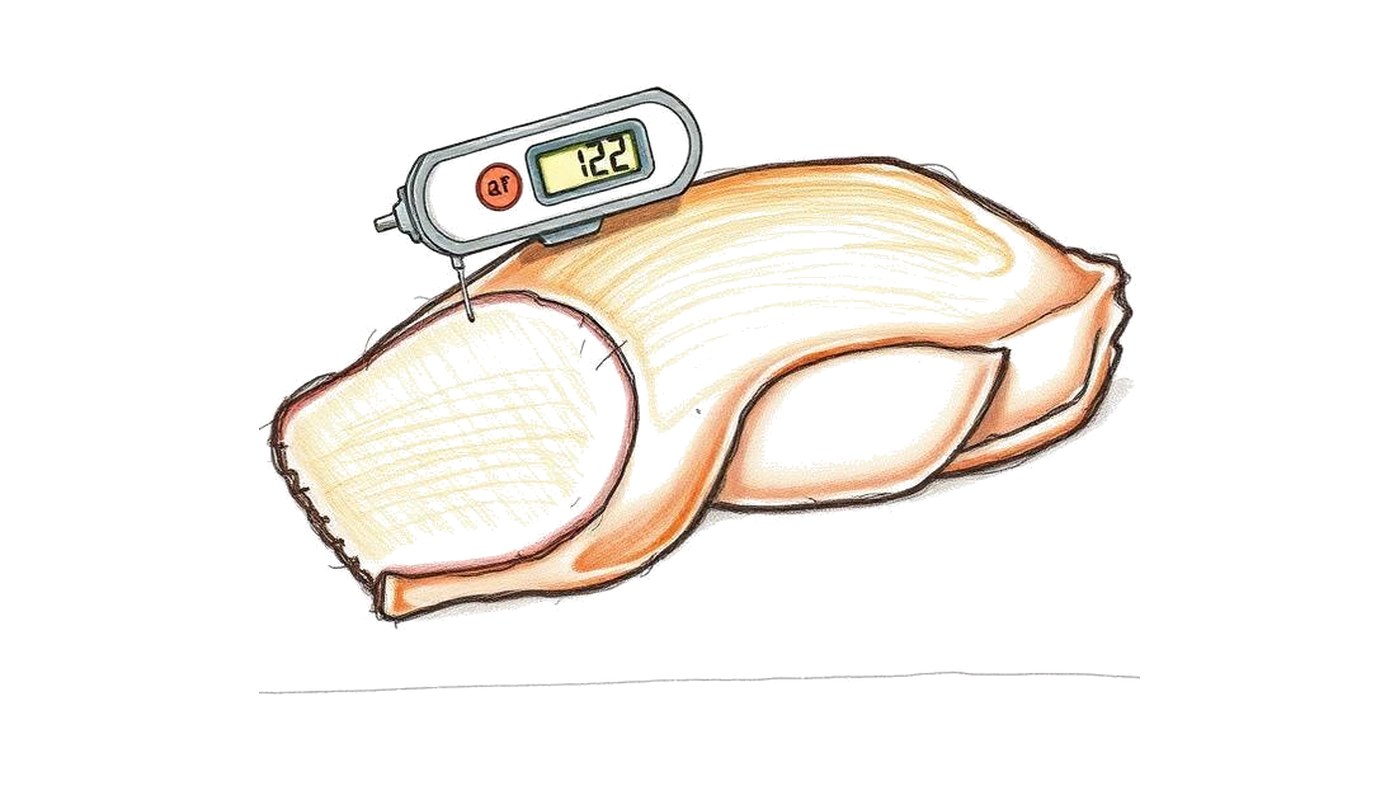
- Thermometer discipline. A leave-in or fast instant-read probe matters more on a lean wild breast, not less, because the margin between rare and dry is narrower.
- Resting. Letting the meat rest off heat before slicing still lets juices redistribute, and it still matters for a thin, quick-cooking cut.
Fails on a wild bird
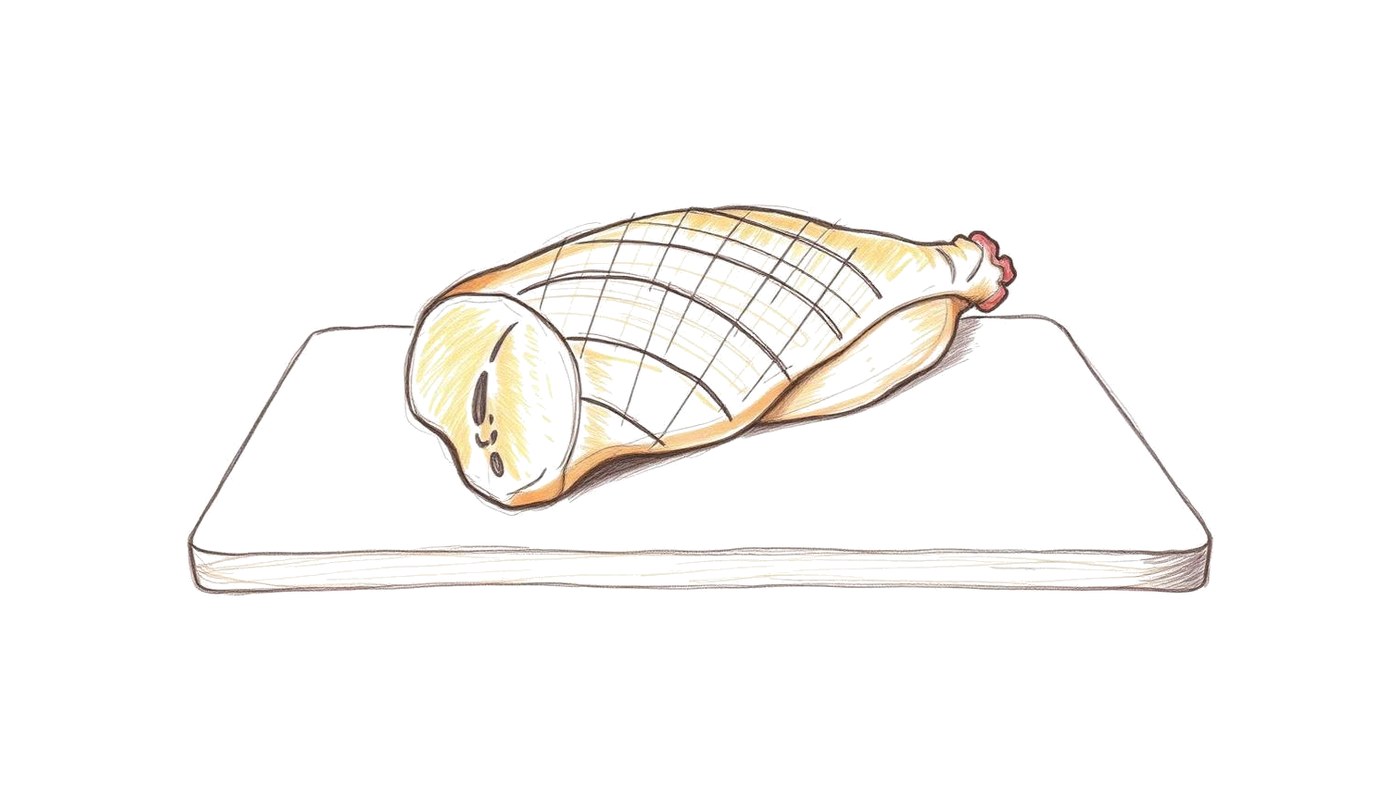
- Long cold-pan renders. The cold-pan method for farmed duck breast relies on a thick fat cap taking 8–10 minutes to render slowly. A wild breast with little or no fat cap will sit in a barely warm pan for that long and overcook from the inside before any useful rendering happens.
- Low-and-slow roasting of a whole lean bird. Farmed whole-duck roasting times assume a fat layer that bastes the meat as it renders. A lean wild bird roasted the same way for the same time will dry out well before it looks or reads as done by a farmed bird's visual cues.
Handling and safety differences
Wild-harvested birds carry handling considerations that farmed, inspected poultry does not. Field conditions, time between harvest and chilling, and the presence of shot mean wild birds should be cooled promptly, cleaned carefully, and checked for embedded shot before cooking. These are food-safety and handling questions, not questions about whether or how a bird may be taken — that's outside the scope of this guide. The safe minimum internal temperature, 165°F (73.9°C), applies to duck whatever its source.†
Common questions
- Can I still use a duck-breast doneness chart written for farmed duck?
- Internal temperature targets themselves still apply — 165°F (73.9°C) is the USDA minimum regardless of source, and the same culinary-convention ranges below that are still what chefs use. What changes is the method to get there, since a lean breast overshoots those targets faster.
- Why does wild duck taste so different bird to bird?
- Diet, species, age and season all shift flavour and fat noticeably more in wild ducks than in farmed ones, which are raised on a controlled feed to a consistent slaughter age.
Related guides
- How to Cook Wild Duck BreastA decision tree for lean, unpredictable birds — skin on or off.
- Duck Breast Temperature & DonenessWhat the numbers mean, and where safety guidance and kitchen practice differ.
- Where to Buy Duck OnlineEight things to compare before you pay for cold-chain shipping.
- Pan-Seared Duck BreastScore, render cold, and finish hot for shatteringly crisp skin over a rosy, evenly cooked centre.
- What Should I Do With This Duck?Answer five questions, get a method that suits what you have.
- What Does Duck Taste Like?Closer to steak than chicken — and why fat, not gaminess, drives the flavour.
References
- Wild Game from Field to Table — USDA Food Safety and Inspection ServiceHandling guidance for wild-harvested birds, including field dressing and chilling.Reference checked 2026-08
- Safe Minimum Internal Temperature Chart — USDA Food Safety and Inspection ServiceAll poultry, including duck and duck pieces, is listed at a 165°F (73.9°C) safe minimum internal temperature.Reference checked 2026-08