
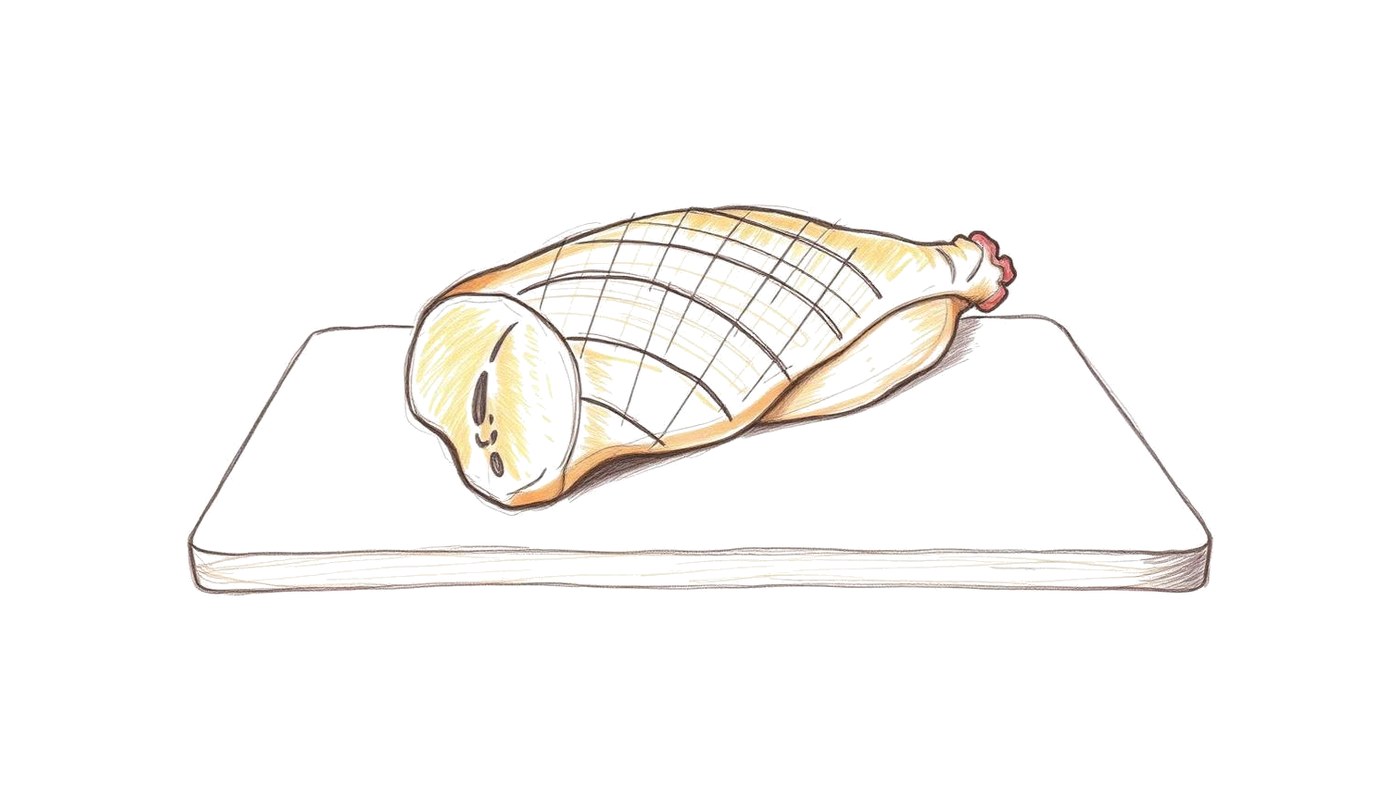
Scoring duck skin is a fifteen-second job, and almost every problem with it — torn skin, cuts that go too deep into the meat, a wandering diamond pattern — traces back to the knife, not the cook. The good news is that the knife that solves it isn't a specialist purchase or a premium brand. It's whichever blade in your kitchen is thin, sharp, and easy to steer.
Evaluation basis: published specifications, manufacturer or seller documentation, and the duck-specific cooking requirements explained in this guide. Editorial standards
What actually decides the outcome
Before comparing shapes, it helps to know what you're optimising for. See how to score duck breast for the technique itself — this guide is about the tool, not the cuts.
Sharpness beats brand, every time
A dull edge doesn't slice duck skin — it pushes and compresses it, which is how you end up tearing the fat cap or dragging the whole breast sideways on the board. Sharpness is also the one factor that has nothing to do with what you paid: a mid-range knife maintained on a honing steel and sharpened periodically will out-cut a neglected expensive one. If your knife struggles here, sharpening it is very often the actual upgrade you need, not a new knife.
Thinness behind the edge
Separate from sharpness is geometry: how thin the blade is just behind the cutting edge. A thin grind parts the skin cleanly with almost no downward pressure. A thick-shouldered blade — common on budget knives built for durability over finesse — has to wedge its way through, which is what pushes the fat cap out of shape instead of slicing it. This is largely fixed at manufacture; no amount of honing changes the geometry of the blade itself.
Tip geometry and control
Scoring is tip-led work — you're steering a shallow, controlled line across a curved, slightly springy surface. A fine, light tip (petty, paring, or boning knives all have one) is easy to keep at a consistent shallow depth. A heavier, blunter tip, common on some larger chef's knives, is more prone to suddenly biting deeper than you intended if your pressure isn't perfectly even.
Blade length: one stroke vs. several
A blade long enough to cross the breast in a single, confident pull gives a straighter, more even line than several short, timid passes stitched together. For most breasts, that means something in the 120–210 mm range — short knives like a paring blade need more passes, which is a real trade-off worth accepting only when the extra control matters more, as it does on a small or delicately fatted breast.
Stiff vs. flexible blades
A stiff blade holds a straight line and a consistent depth without effort. A flexible one — common on some boning knives — tends to wander slightly under pressure, which shows up as a scoring pattern that drifts rather than staying crisp. If you're choosing between two similar knives, the stiffer one is the safer bet for this specific job.
Handle grip with greasy hands
Duck fat gets on your hands fast, and a slick handle is a genuine safety issue with a sharp blade in your grip. Textured or slightly contoured handles hold up better than polished wood or smooth resin once things get greasy. Wipe your hand and the handle between passes if you notice your grip loosening — it's a cheap habit that prevents a real injury.
What to avoid
- Serrated knives. They saw and drag instead of slicing, which tears skin rather than cutting it cleanly.
- Anything dull. A dull blade is the single most common cause of a messy score line, regardless of the knife's shape or price.
- Thick-shouldered budget blades. Durable for rough kitchen tasks, but the thick grind behind the edge wedges through skin instead of parting it.
Board and safety technique
Score on a stable board with a damp towel underneath so it can't slide, and always cut away from your guiding hand's fingers, which should be curled back and out of the blade's path. Score only through the skin and fat, stopping before you reach the meat — cutting into the meat is a common mistake that lets juices escape during cooking instead of staying under the crisping skin. If you also carve the finished bird, see how to carve a duck — it's a different knife job with different priorities.
If you only own one knife
A sharp petty or utility knife (120–150 mm) is the single best all-round choice: short enough for excellent control, long enough to cross most breasts in one pull, and thin behind the edge by design. If the only knife you own is a chef's knife, that's fine too — as long as it's genuinely sharp. A dull chef's knife is the worst combination on this list, not because of its shape but because dullness undoes every other advantage a longer blade offers.
Buyer profiles
Choose a petty or utility knife if: you want one knife dedicated to scoring, trimming, and general precision work, and don't need it to double as a carving knife.
Choose your existing chef's knife if: it's already sharp and you'd rather not add another blade to the drawer.
Choose a boning knife if: you regularly break down whole birds and want one blade that handles scoring and jointing.
Choose a paring knife if: you're working a small or wild duck breast with a thin fat cap where maximum control matters more than speed.
Compare the four blade shapes
| Option | Tip control | Blade length | Edge & geometry | Knuckle clearance |
|---|---|---|---|---|
| Petty / utility knife (120–150 mm) | Excellent. Short blade, light tip, easy to steer in a straight line. | 120–150 mm covers a breast in a single pull. | Thin behind the edge, so it parts skin instead of pushing it. | Plenty — you're working on a flat surface, not through a board. |
| Chef's knife (200–210 mm) | Good if sharp; the length makes fine tip work less intuitive. | Long enough to score in one stroke, which helps consistency. | Depends entirely on the knife. A blunt chef's knife is the worst option here. | Ample. |
| Boning knife | Very good; narrow blade, pointed tip. | 130–150 mm typical. | Often slightly thicker behind the edge than a petty. | Good. |
| Paring knife (80–100 mm) | Highest of the group. | Too short for one continuous stroke on a large magret. | Thin and easy to keep sharp. | Fine. |
Petty / utility knife (120–150 mm)
Best for: Scoring duck skin, if you're buying one knife for the job.
- Tip control
- Excellent. Short blade, light tip, easy to steer in a straight line.
- Blade length
- 120–150 mm covers a breast in a single pull.
- Edge & geometry
- Thin behind the edge, so it parts skin instead of pushing it.
- Knuckle clearance
- Plenty — you're working on a flat surface, not through a board.
Why it stands out
- The tip does what you tell it, which is the entire skill of scoring.
- Doubles as a trimming and silverskin knife.
What to check
- Too small for carving a whole bird.
No verified seller link yet
Details checked 2026-08
Chef's knife (200–210 mm)
Best for: Cooks who already own a sharp one and don't want another knife.
- Tip control
- Good if sharp; the length makes fine tip work less intuitive.
- Blade length
- Long enough to score in one stroke, which helps consistency.
- Edge & geometry
- Depends entirely on the knife. A blunt chef's knife is the worst option here.
- Knuckle clearance
- Ample.
Why it stands out
- One long, confident stroke per score line beats several timid passes.
- No extra purchase if yours is genuinely sharp.
What to check
- Heavier tip makes it easier to cut too deep on a soft fat cap.
- Thick-shouldered budget knives compress the skin rather than slicing it.
No verified seller link yet
Details checked 2026-08
Boning knife
Best for: People who also break down whole birds.
- Tip control
- Very good; narrow blade, pointed tip.
- Blade length
- 130–150 mm typical.
- Edge & geometry
- Often slightly thicker behind the edge than a petty.
- Knuckle clearance
- Good.
Why it stands out
- Handles scoring and jointing legs, so it earns its drawer space.
- Stiff models track a straight score line well.
What to check
- Flexible models wander when you want a dead-straight line.
- Curved profiles make an even scoring depth harder to hold.
No verified seller link yet
Details checked 2026-08
Paring knife (80–100 mm)
Best for: Tight diamond patterns and small or wild-duck breasts.
- Tip control
- Highest of the group.
- Blade length
- Too short for one continuous stroke on a large magret.
- Edge & geometry
- Thin and easy to keep sharp.
- Knuckle clearance
- Fine.
Why it stands out
- Maximum precision when the fat cap is thin and the margin for error is small.
- Cheap to replace and easy to sharpen.
What to check
- Multiple passes per line invite uneven depth.
- Not a carving knife under any circumstances.
No verified seller link yet
Details checked 2026-08
Evaluation basis: published specifications, manufacturer or seller documentation, and the duck-specific cooking requirements explained in this guide. Editorial standards
Shop this guide
What this guide actually asks you to own. If you already have a working version, keep it.
A knife that's actually sharp, not a new one
Sharpening the knife you already own solves more scoring problems than buying another blade does.
See the scoring techniqueA carving knife for the finished bird
Scoring and carving ask different things of a blade — don't assume one knife has to do both well.
See how to carve a duck
Cooking duck tonight? Don't guess.
If you want skin that shatters and a breast you can call at the right temperature, the playbook is the short version: scoring depth, cold-pan rendering, and the numbers to pull at. Tell us what you're cooking in the Duck Game Plan and we'll build your temperature, timing, crispy-skin and serving plan. Subscribers also get Duck the Fundamentals, the printable 28-page playbook, a short welcome series, and occasional DeliciousDuck recipes and guides.
- Scoring depth and cold-pan rendering, step by step
- Pull temperatures and carryover for breast, with a rest plan
- Why skin turns leathery, and the two fixes that work
- A printable kitchen card with temperatures and timings
You can also read our companion article, the Duck Cooking Starter Guide, plus the temperature and doneness guide and the calculators, right now.
Common questions
- Do I need a special duck knife?
- No. There's no dedicated “duck scoring knife” category worth buying into. What you need is a thin, sharp blade with a light tip — a petty knife, a sharp chef's knife, or a boning knife all qualify.
- Is a more expensive knife better for scoring?
- Not reliably. Price tracks steel quality and fit and finish more than it tracks the two things that actually matter here: how thin the blade is behind the edge, and how sharp it currently is. A cheap knife freshly sharpened will outscore an expensive one that's gone dull.
- Can I use a serrated knife to score duck skin?
- You can, but it drags and tears rather than slicing cleanly, which is the opposite of what a good score line needs. Save serrated blades for bread and tomatoes.
- How often should I sharpen the knife I use for this?
- Hone before every use if the knife has a steel-friendly edge, and have it properly sharpened whenever it stops popping cleanly through skin without pressure. For most home cooks that's every few months of regular use, sooner if you notice yourself pressing harder than you used to.
Related guides
- How to Score Duck BreastDepth, pattern and knife control — the 90 seconds that decide your skin.
- How to Carve a Whole DuckSix moves, in the order that keeps the skin intact and the meat hot.
- How to Cook Duck BreastThe cold-pan method, why it works, and how to rescue it when it doesn't.
- Pan-Seared Duck BreastScore, render cold, and finish hot for shatteringly crisp skin over a rosy, evenly cooked centre.