
Short answer
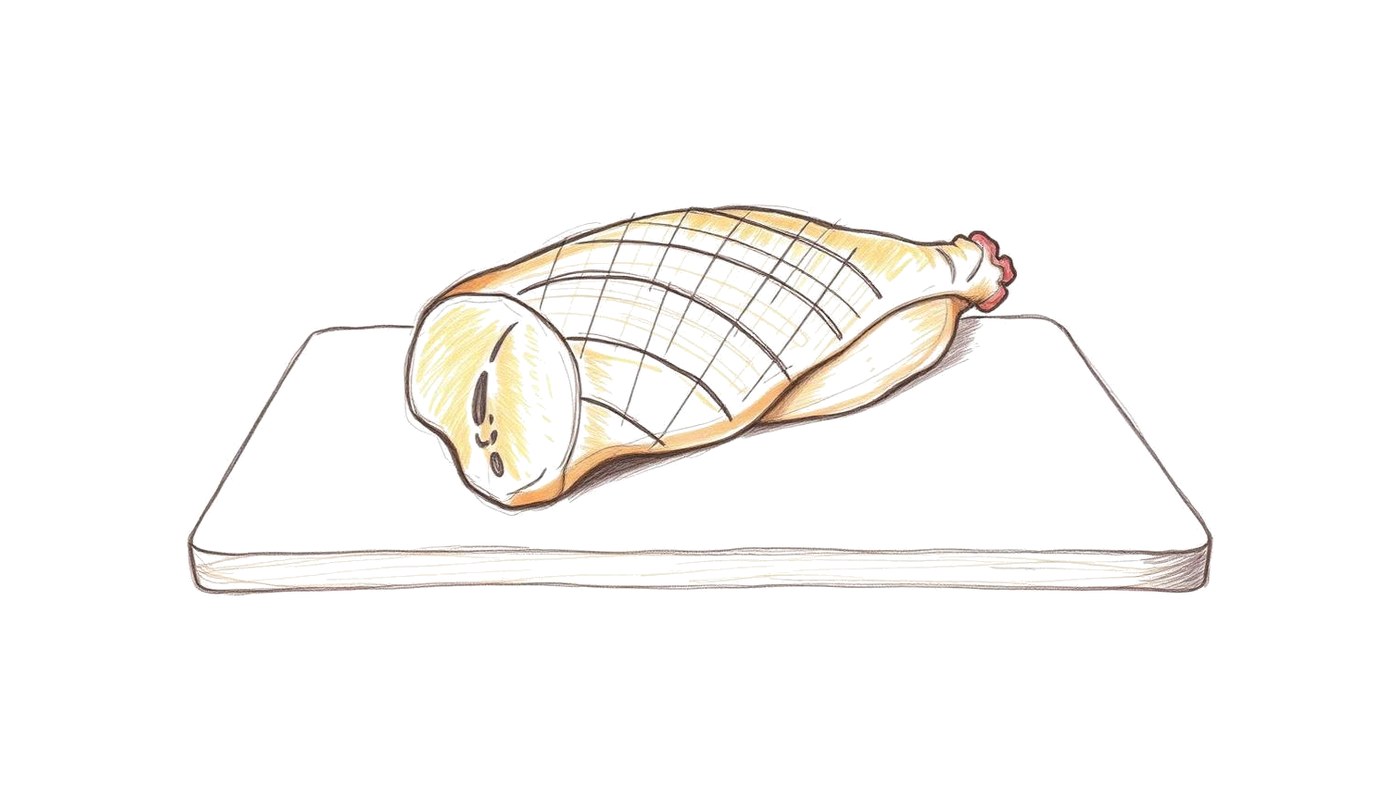
Score the skin in a shallow crosshatch about ¼ in (6 mm) apart, cutting through the fat but stopping before the meat. The cuts open more surface for fat to escape during a slow render; if your knife reaches the flesh, juices leak out and the skin steams instead of crisping.
What scoring actually does
Scoring cuts a grid of shallow lines through the fat cap on a duck breast without reaching the meat underneath. Those cuts break an otherwise continuous sheet of fat and skin into smaller sections, which does two things during cooking: it multiplies the surface area of fat exposed directly to pan heat, so it renders faster and more evenly, and it opens channels for melted fat to drain away from the skin instead of pooling under it. Unscored skin can still crisp, but slowly and unevenly, and it traps rendered fat against the surface longer than scored skin does.
Depth: through the fat, not into the meat
The cut needs to go through the full thickness of the fat cap and stop at the thin membrane sitting just above the muscle. Cutting into the meat itself lets juices escape during cooking and gives the flesh nowhere to go but tougher near each cut. Cutting too shallow — only nicking the surface of the skin — barely changes rendering behaviour at all, since most of the fat volume is still sealed under unbroken skin.
A reliable way to judge depth by feel: you should sense a slight change in resistance as the blade passes from fat into the firmer membrane, and stop there. On most breasts that is roughly 3–5 mm (1/8–3/16 in) deep, but go by feel and sight rather than a fixed number, since fat cap thickness varies by bird and season.
Why the skin has to be cold
Fat that's cold, straight from the refrigerator, is firm and holds its shape under the blade, so a cut goes in cleanly and stays where you put it. Fat that has warmed to room temperature turns soft and slightly greasy, and the blade tends to drag and smear it rather than slice through cleanly, which blurs the cut lines and makes consistent spacing harder to judge. Score straight from the fridge, then let the breast sit briefly before it goes in the pan if your recipe calls for a short temper.
Pattern choice: parallel, diamond, or none
| Pattern | What it does | Best for | Trade-off |
|---|---|---|---|
| Parallel lines | Opens fat evenly along one axis; simplest to cut consistently | Everyday cooking, faster prep | Slightly less total surface area exposed than a diamond grid |
| Diamond cross-hatch | Maximises exposed fat surface and drainage channels in both directions | Thicker fat caps, presentation-focused plating | Takes longer and is easier to cut unevenly under time pressure |
| No scoring | Leaves the fat cap as a continuous sheet | Very thin-fat breasts where there's little to render | Slower, less even rendering; higher risk of soft patches |
Knife grip, angle and spacing
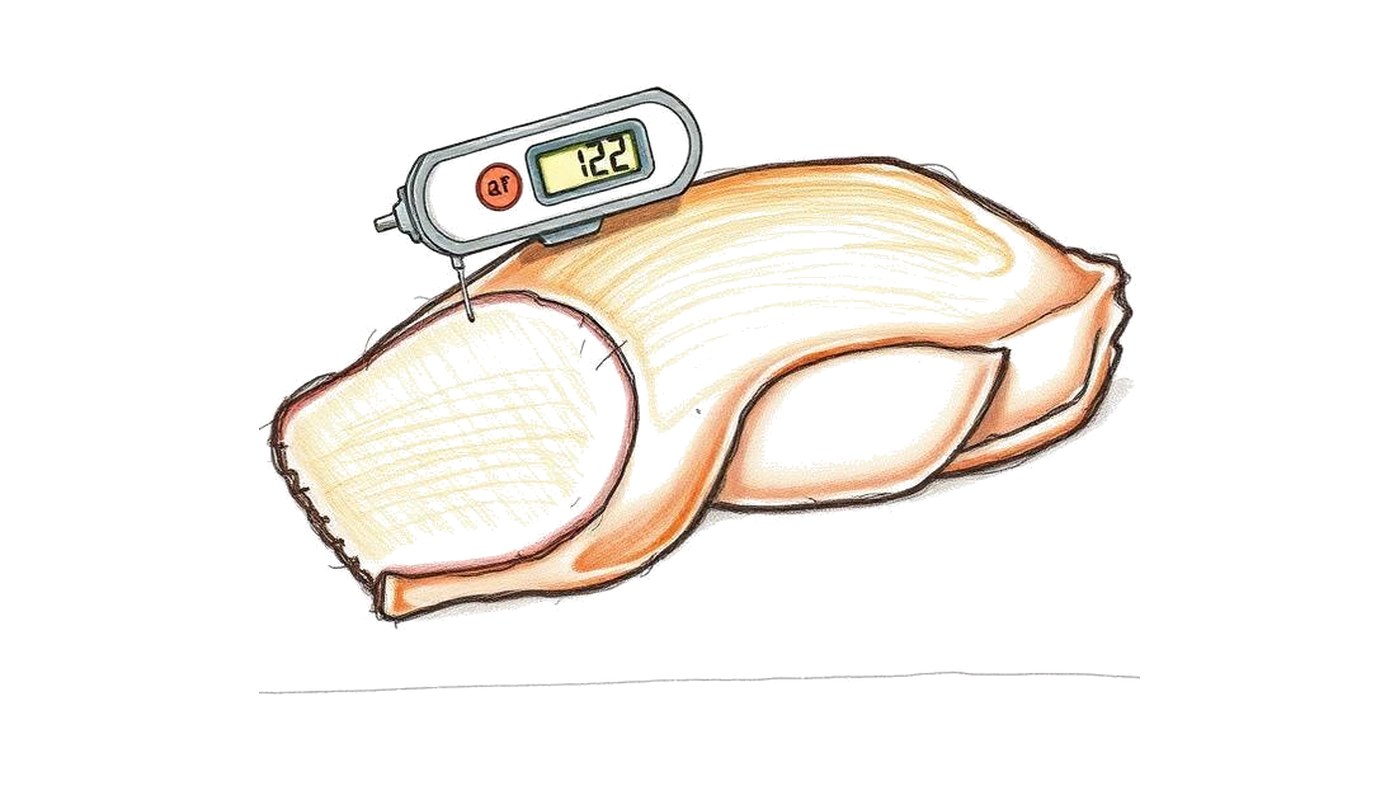
Depth control is a knife problem before it is a technique problem — see knives for scoring duck skin for blade shapes that give tip feedback. Once the skin is scored, the cold-pan duck breast method is what turns those channels into rendered fat.
Choose a knife with tip control
A sharp paring knife, boning knife, or the tip of a chef's knife works better than the full blade of a large knife, since scoring is a controlled, shallow motion rather than a long draw.
Grip with your index finger along the spine
Choking up on the blade with a finger along the top gives you direct feedback on depth as you cut, which matters more here than raw cutting speed.
Angle the blade low, almost flat to the skin
A low angle keeps the cut shallow and consistent along its length. A steep, near-vertical angle makes it easy to punch through into the meat by accident.
Space cuts 8–10 mm (about 1/3 in) apart
Tighter spacing exposes more fat but takes longer and risks the cuts merging into a torn mess; wider spacing leaves more unrendered fat between cuts.
Cut in one continuous stroke per line
Short, sawing strokes are more likely to wander off depth partway through. One smooth pass at a steady depth keeps the cut even end to end.
Quack Fix: scoring mistakes
Juice leaks out of the breast during cooking
- Likely cause
- Cuts went through the membrane into the meat
- Fix now
- Nothing to do mid-cook; the breast will still cook fine, just with slightly more moisture loss
- Prevent next time
- Score at a low, shallow angle and stop the moment resistance changes underneath the blade
Skin still looks soft and pale after a full render
- Likely cause
- Scoring was too shallow or too widely spaced to open enough fat surface
- Fix now
- Extend the render time over slightly higher heat and pour off fat more frequently
- Prevent next time
- Cut fully through the fat cap and space lines 8–10 mm apart
Cut lines are ragged or uneven in depth
- Likely cause
- Skin was at room temperature and smeared under the blade, or the knife lacked tip control
- Fix now
- Wipe the skin dry and finish scoring the missed sections carefully before it goes in the pan
- Prevent next time
- Score straight from cold, and use a knife with a fine, controllable tip
Fat renders unevenly across the breast
- Likely cause
- Scoring pattern didn't cover the whole surface, often skipping the edges
- Fix now
- Rotate the breast in the pan and manually spoon hot fat over any unscored patches
- Prevent next time
- Carry the scoring pattern edge to edge, including the tapered ends
Scoring matters even more in an air fryer, where draining is the only way fat leaves the basket. Air fryer duck breast
Related guides
- How to Cook Duck BreastThe cold-pan method, why it works, and how to rescue it when it doesn't.
- Why Duck Skin Won't CrispSeven symptoms, seven causes, and the fix you can still apply mid-cook.
- Best Knife for Scoring DuckTip control beats prestige — four blade shapes, honestly compared.
- Pan-Seared Duck BreastScore, render cold, and finish hot for shatteringly crisp skin over a rosy, evenly cooked centre.
- Duck Breast Temperature & DonenessWhat the numbers mean, and where safety guidance and kitchen practice differ.
- Oven-Roasted Duck BreastDuck breast rendered in a skillet and finished in the oven — the steadier route to crisp skin and an even rosy centre when you are cooking four or more.