
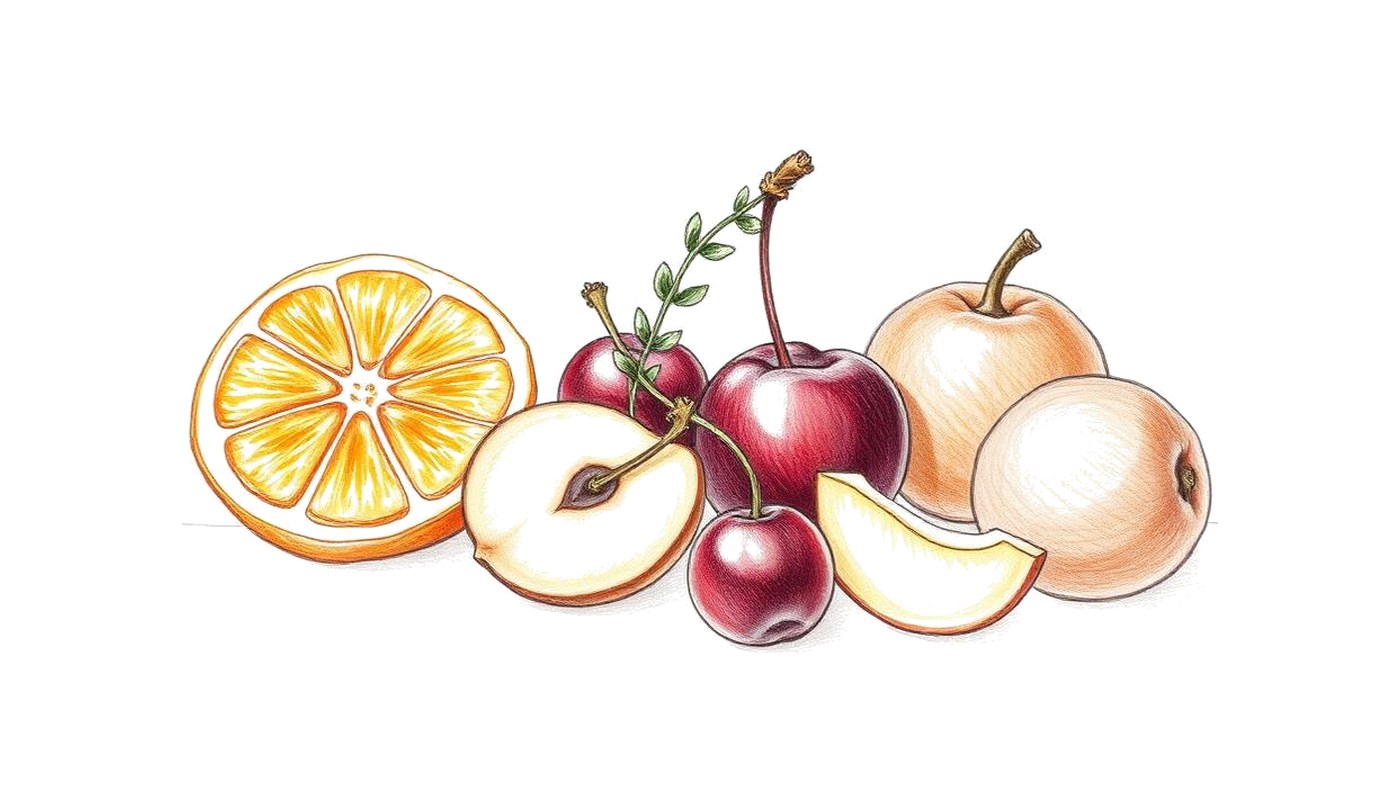
Why stone fruit and duck fit together
Stone fruit brings three things duck wants: acidity to cut fat, sugar to echo the faint sweetness in duck skin, and — in the darker fruits and their skins — a tannic, slightly astringent edge that behaves the way red wine does against rich meat. That third quality is the one people underrate, and it is why dark plum skin and sour cherry work better than, say, a very ripe peach.
Think of it as the same job orange does, in a different register: orange is bright and bitter, stone fruit is deep and tannic. The choice between them is mostly about whether you want the plate to feel fresh or autumnal.
Fruit by fruit
| Fruit | Acid | Sweetness | Tannin / astringency | Best duck use |
|---|---|---|---|---|
| Sour / Morello cherry | High | Moderate | Low–moderate | The most reliable partner for a rare duck breast; sharp enough to need little vinegar |
| Sweet cherry | Low–moderate | High | Low | Fine, but needs vinegar and stock to keep it savoury |
| Dark plum (damson, greengage-adjacent, Italian prune plum) | Moderate–high | Moderate | High, mostly in the skin | Whole roast, confit, smoked duck; cook skin-on for structure |
| Apricot | Moderate | Moderate | Low | Warm-spiced and North African directions; good with legs and shredded duck |
| Peach / nectarine | Low | High | Very low | Grilled alongside rather than made into sauce; needs acid support |
| Dried cherry, prune, dried apricot | Low | High and concentrated | Moderate | Braises, stuffings, winter sauces; always pair with vinegar or wine |
Fresh versus dried, and why it changes the sauce
Drying removes water and concentrates sugar, and it does not preserve fresh acidity. A sauce built on dried fruit is therefore denser and sweeter and almost always needs a sharp counterweight — red wine, sherry vinegar, or both. It also holds body better, which makes it well suited to braises and to sauces you want to make ahead.
Fresh fruit brings acidity and a cleaner flavour but releases water, so a fresh-fruit sauce needs either reduction time or a reduced stock base to have any body. A useful hybrid: build the base with a little dried fruit and reduced stock for depth, then add fresh halved cherries or plum wedges in the last minute so they keep shape and brightness.
Matching by cut and method
The richer and smokier the duck, the darker and more tannic the fruit can be. The leaner or rarer the duck, the more you want acidity and less cooked-down sugar.
| Duck | Fruit direction | Support | Aromatics | Serve |
|---|---|---|---|---|
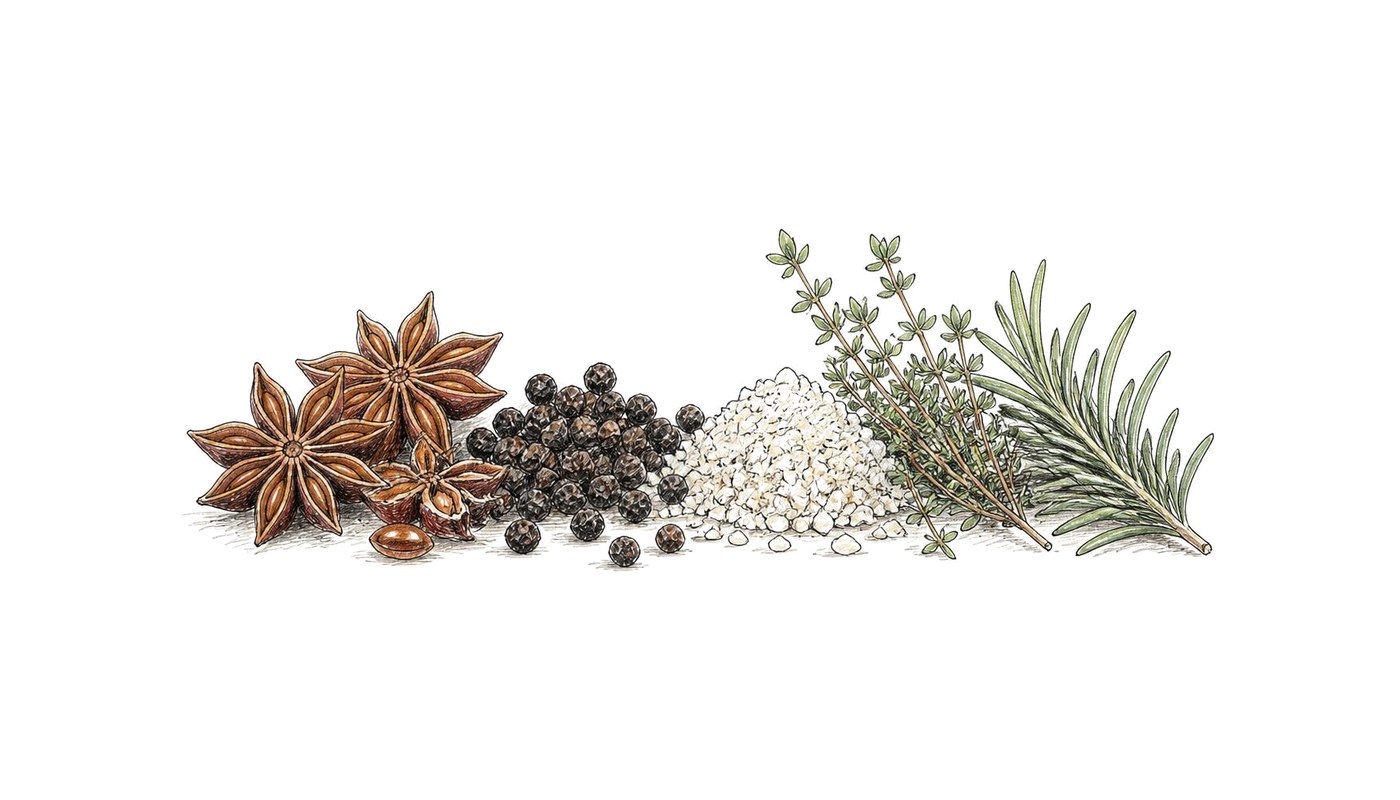
| Pan-seared breast | Sour cherry, fresh dark plum wedges | Reduced stock, red wine, sherry vinegar | Thyme, black pepper | Sauce pooled under the slices, skin exposed |
| Whole roast duck | Cooked dark plum, damson | Pan juices, port, red-wine vinegar | Bay, star anise, cinnamon in token amounts | Sauce in a jug; glaze only in the final stretch |
| Confit / crisped legs | Prune, dried cherry, plum | Reduced stock, red wine, mustard | Thyme, garlic, juniper | Alongside lentils or beans; keep crisp skin dry |
| Smoked duck | Plum, sour cherry | Cider or rice vinegar, a little soy | Star anise, ginger, chilli | Sauce or a sharp pickled-fruit condiment |
| Wild duck | Sour cherry, damson, sloe | Red wine, game or chicken stock | Juniper, bay, black pepper | Small amount of intensely reduced sauce |
Where fruit sauces go wrong
It tastes like pudding. No stock, no vinegar, too much reduction. Fruit concentrates as it cooks; savoury elements do not appear on their own.
It is watery. Fresh fruit released liquid into a sauce with no reduced-stock base. Reduce further, or start from stock next time.
Everything is one flavour. Add a texture and a fresh element — a few raw or barely-cooked fruit pieces, a sharp green, cracked pepper at the end.
The skin went soft. The sauce was ladled over the duck. Put it underneath.
If you want a worked example
Our smoked duck with plum sauce applies this framework end to end, with the sauce built to the ratios described here.
For the general sauce mechanics, see the sauce guide; for balancing a whole plate, use the Duck Pairing Finder.
Common questions
- Fresh or dried fruit for a duck sauce?
- Dried fruit gives concentrated flavour, more sugar and body but no fresh acidity, so it needs vinegar or wine alongside. Fresh fruit gives brightness and a lighter texture but can be watery and unpredictable in sweetness. Many good sauces use both: dried for depth, fresh added late for lift.
- Which is better with duck breast — cherry or plum?
- Cherry suits duck breast slightly better because its acidity and clean red-fruit flavour cut a rare, fatty slice without adding much weight. Plum, especially cooked down, is jammier and works better with confit, smoked duck and whole roast.
- Can I use jam as a shortcut?
- Yes, as a starting point, but treat it as sugar plus fruit rather than as sauce. Cut it with reduced stock and vinegar until it tastes savoury and sharp, not spreadable.
Related guides
- Why Orange Works With DuckZest, acid and bitterness — the three levers that keep it from cloying.
- Best Sauces for Duck BreastFive sauce families, and which cooking method each one flatters.
- The Best Acids for DuckWhy acid does more for duck than any other seasoning decision.
- Duck Pairing FinderCut, flavour direction and occasion in — sauce, acid, starch and greens out.
- How to Cook Duck BreastThe cold-pan method, why it works, and how to rescue it when it doesn't.
- Smoked Duck with Plum SauceGentle smoke, careful temperature control, and a sharp-sweet plum reduction to cut the richness.