
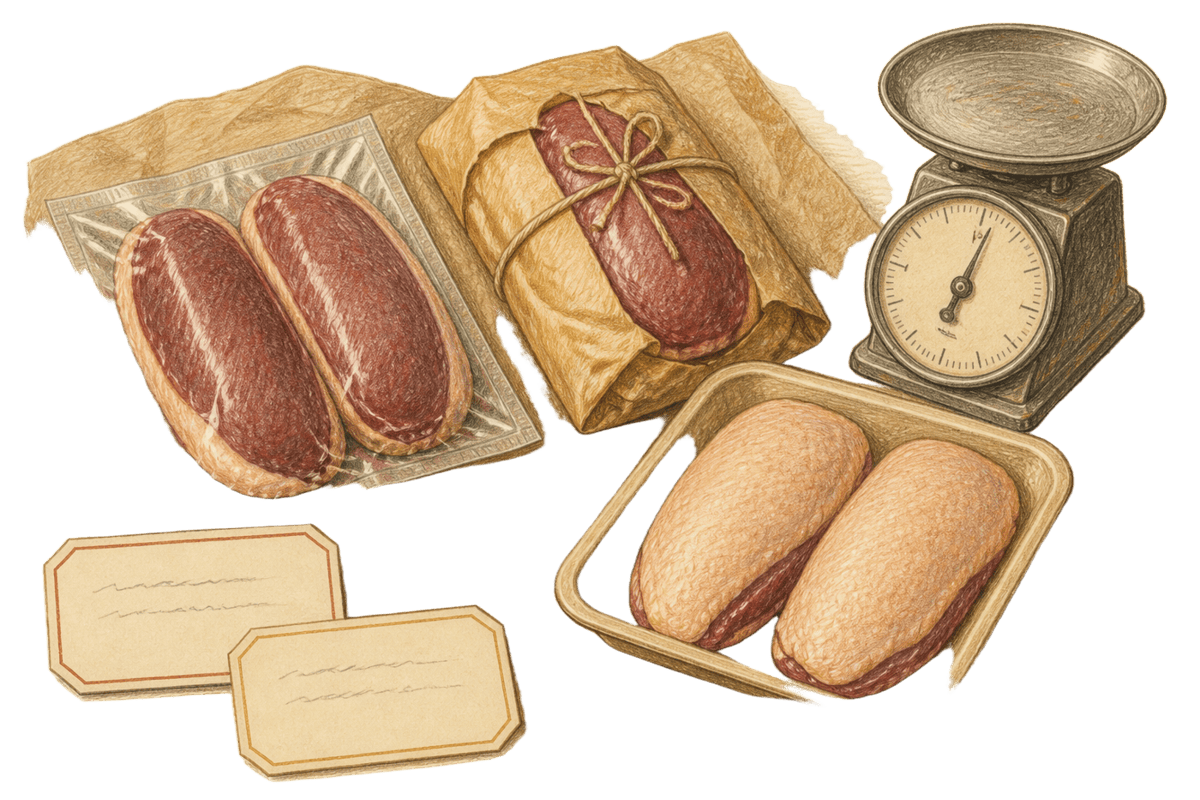
Duck breast is the cut most people search for by name, and it's also the one sellers describe least consistently. Two listings can both say “duck breast” and mean different things: skin on or off, one piece or a pair, a modest Pekin breast or a magret twice its thickness. Sort out the format and the weight first. The seller you choose falls out of that, not the other way round.
Updated
The short answer
- It's your first time pan-searing duck breast
- Boneless, skin-on breast — two pieces, at the smaller end of the rangeThe skin is the whole point of the method, and a smaller breast reaches its pull temperature before the fat cap runs out of patience.
- You want a larger, steak-like breast to slice for a plate
- A magret-style breast, where the listing names the duck typeMoulard breast is conventionally sold larger and thicker, which buys you more margin between crisp skin and an overcooked centre.
- You're cooking dinner for two
- A two-pack of individually sized breastsOne breast per person is the normal plating unit, and two pieces fit a single 10–12 inch pan without crowding.
- You're buying for several guests
- A multi-pack from one producer — or whole birds insteadConsistent piece sizes cook to the same schedule, and past four or five breasts a whole-bird order often makes more sense.
- Availability or budget decides it
- Frozen portioned breast, including store pickupFrozen at the processor and kept frozen is a sound cold chain; pickup removes courier risk from the equation entirely.
How we made these calls
We judge a duck-breast purchase on the four things that change your cook: the format (skin on or off, boneless or not), the size of an individual breast, how many pieces the pack commits you to, and the state it arrives in. Seller choice follows from those, not the other way round.
What this is based on
- Publicly published catalogue and shipping information from the sellers named on this page, read on the date below.
- Our own duck-breast technique pages — cold-pan rendering, pull temperatures, and pan fit — and what each asks of the cut.
- USDA labelling, handling, thawing, and storage guidance for raw poultry, applied to a mail-order shipment.
Evaluation basis. Published catalogue information from the sellers named here, read on the date above, weighed against the breast-cooking requirements in our own technique pages. Weights, pack counts, prices, and delivery windows come from the seller's own listing.
The formats you'll actually see listed
Four descriptions cover nearly everything sold online, and the difference between them changes how you cook far more than the seller's name does.
| How it's listed | What you get | What it's for |
|---|---|---|
| Boneless, skin-on | A single breast half with the fat cap on, no bone | The default for pan searing — score, render from cold, rest |
| Magret / Moulard breast | A larger, thicker breast, usually sold singly | Slicing across for a plate, with more margin while the skin renders |
| Skinless breast | Lean meat, no fat cap | Grilling, stir-fries, salads — anything that never wanted crisp skin |
| Frozen portioned pack | Several pieces frozen individually or together | Cooking in twos over weeks, or feeding a table on one schedule |
Weight per breast, and the pack you're committing to
Two numbers decide whether an order suits your dinner: the weight of a single breast and how many pieces the pack contains. Both sit on the listing, and both move between sellers and between production batches — which is why we quote neither. Read them before you plan a headcount, and remember a large magret-style breast is often one piece serving two plates, not two pieces serving two people.
Thickness matters as much as weight. A thicker breast gives you longer to render the fat before the centre passes the window you were aiming for, which is exactly why it's the friendlier cut for a plate you intend to slice.
Choose by the cook, not by the brand
Work from the dinner backwards. Each of these is a different purchase, even when it comes from the same seller.
| What you're cooking | What to buy | Why |
|---|---|---|
| First attempt at pan-seared breast | Two boneless, skin-on breasts at the smaller end of the range | The skin is the point, and a smaller breast is quicker to get right |
| A sliced breast plate for guests | A magret-style breast where the type is named | Thicker meat means a wider window between crisp skin and overdone centre |
| Dinner for two, no leftovers | A two-pack of similarly sized breasts | One per person, and two pieces fit a 10–12 inch pan without crowding |
| Several guests on one schedule | A multi-pack from a single producer | Even pieces cook to the same timings; past four or five, consider whole birds |
| Grilling, stir-fry, or salad | Skinless breast, or accept you'll remove the skin | Nothing here renders a fat cap, so you're paying for weight you'll trim |
| Whatever's available this week | Frozen portioned breast, including store pickup | Frozen at the processor is a sound cold chain, and pickup removes courier risk |
Shipping, arrival, and the checks worth doing at the door
Breast is small, which cuts both ways: a box of two breasts carries less thermal mass than a whole bird, so it warms faster if it sits at a depot. Check the seller's ship days and stated transit window against a delivery day you'll be home for, then inspect the box before you unpack anything else.
| Check | What you want | Reject if |
|---|---|---|
| Ice or gel packs | Still cold or partly frozen | Fully melted and warm to the touch |
| Vacuum seal | Tight against the meat, intact | Punctured, loose, or full of air |
| Meat temperature | Still icy or cold | Room temperature or noticeably soft |
| Skin and fat cap | Intact, pale, dry-looking | Torn away from the meat, or slimy |
| Colour and smell | Deep pink to red, clean smell | Grey-brown patches or any off odour |
The four formats, side by side
Read down the column for the format you were leaning toward, then across the rows that matter for this cook.
| What you're deciding on | Boneless skin-on (Pekin-type) | Magret-style larger breast | Skinless breast | Frozen portioned multi-pack |
|---|---|---|---|---|
| Crisp-skin potential | The whole reason to buy this format — score it and render from cold | Same method, more fat to render, so allow longer | None; there is no fat cap to work with | As good as the format inside the pack — check whether it says skin-on |
| Portion planning | One breast per person | Often carved across for two smaller plates | One per person, but expect a leaner plate | Read the pack count; pieces are usually sized alike |
| Method fit | Cold-pan sear, then rest | Cold-pan sear with a longer render, or sear then finish in the oven | Fast, hot cooking — grill, griddle, or slice raw for stir-fry | Any of the above, once fully thawed |
| What to check on the listing | "Boneless, skin-on" stated plainly, plus the weight per breast | Whether the duck type is named, and the weight per breast | That skinless is deliberate, not a photograph you inferred it from | Pack count, weight per piece, and whether it ships frozen |
| Where it goes wrong | Starting the pan hot, so the skin seizes over unrendered fat | Treating it like a small breast and pulling it too early | Expecting crisp skin from a cut that has none | Cooking from a partial thaw, so the centre lags the surface |
Who each option is for
Listed in no particular order. We don't rank these, because the right answer changes with how you cook rather than with any score we could assign.
Boneless skin-on breast (Pekin-type)
Good fit: The default for pan searing: a manageable piece, an intact fat cap, and no bone to work around.
Not for: Anyone who wanted a thick centre-cut steak to slice across for a crowd.
Magret-style larger breast
Good fit: Cooks who slice breast for a plate and want a wider temperature window while the skin renders.
Not for: A first attempt, or a pan too small to hold it flat.
Skinless breast
Good fit: Grilling, stir-fries, salads, and anything where the skin was never going to be crisped.
Not for: The cold-pan method — with no fat cap there is nothing to render.
Frozen portioned multi-pack
Good fit: Buying in twos over several weeks, or feeding a table with pieces that cook to one schedule.
Not for: Cooking tonight; refrigerator thawing is the safe route and it takes time.
The sellers, read for breast
The same four sellers, compared on the things that only matter when breast is what you came for. Every attribute comes from the seller's own public catalogue at the verification date shown, and each seller's link sits once in the decision panel above.
| Option | Breast formats listed | Duck type named | Pack & portion notes | Shipping & arrival | Best fit |
|---|---|---|---|---|---|
| Culver Duck | Raw breast is listed by name, alongside smoked breast as a separate product. | A single-producer catalogue rather than a breed menu — check the listing for what a given pack contains. | Pack count and per-breast weight vary by product; the listing is the only reliable answer. | Frozen shipment, so plan a refrigerator thaw rather than cooking on delivery day. | Buying breast as part of a wider duck order. |
| Joe Jurgielewicz & Son (TastyDuck) | Breasts are listed individually, and sampler kits pair them with other cuts. | Single-producer sourcing, so pieces in one order are consistent with each other. | Kits bundle cuts you did not specifically choose — read the contents before ordering for a fixed headcount. | Frozen shipment; thaw in the refrigerator before you cook. | Learning what you like before buying breast in quantity. |
| Fossil Farms | Portioned cuts across more than one duck type, so more than one breast size can appear. | Listings distinguish duck types — the practical place to check whether a magret-style breast is currently listed. | Size language sits on the product page; treat it as the listing's claim, not ours. | Frozen shipment inside a wider specialty order. | Buying to a recipe that specifies the duck, not just "duck". |
| Wild Fork | Duck appears in the frozen range, but which cuts varies — confirm breast before planning a menu. | Less producer and type detail than the duck specialists. | Already frozen and portioned, which suits buying one or two pieces. | Store pickup avoids courier cold-chain risk entirely. | A weeknight breast buy alongside the rest of your shopping. |
Common questions
- Which duck breast format should I buy for pan searing?
- Boneless and skin-on, with the fat cap intact. The cold-pan method exists to render that fat and crisp the skin, so a skinless breast rules the method out before you start. If a listing doesn't say “skin-on” in words, don't infer it from the photograph — ask.
- Is magret different from ordinary duck breast?
- Magret is the breast of a Moulard duck, and it's conventionally sold larger and thicker than a Pekin-type breast. That extra thickness is genuinely useful: it buys you more time to render the skin before the centre climbs past where you wanted it. It also needs a pan big enough to hold it flat.
- How many duck breasts should I order per person?
- One breast per person is the normal plating unit, and a larger magret-style breast is often sliced across for two smaller plates. Weights vary between sellers and between packs, so read the weight on the listing rather than assuming — we don't publish a weight on any seller's behalf.
- Will mail-order duck breast arrive frozen, and how do I thaw it?
- Almost always frozen, because that's how a seller holds a cold chain across multi-day transit. Thaw it in the refrigerator, never on the counter, and keep it refrigerated at 40°F (4°C) or below until you cook. Refrigerator-thawed raw poultry keeps 1–2 days before cooking.
- Can I trust a breed name on the listing to tell me how to cook it?
- Only loosely. The size and thickness of the breast in front of you decides your timing more than the name on the box does. Take the format and the weight from the listing, then judge fat cover and thickness once the package is open.
- Should I buy breast, or buy a whole duck and cut it myself?
- Buy breast when breast is the meal and you want two even pieces with no butchery. A whole bird is better value per pound and gives you legs and fat as well, but it commits you to a longer thaw and a different cook. For that comparison, start with the general sourcing guide.
Cooking duck tonight? Don't guess.
Most disappointing duck dinners start at the point of purchase. The playbook includes the shopping checklist we use before anything hits a pan. Tell us what you're cooking in the Duck Game Plan and we'll build your temperature, timing, crispy-skin and serving plan. Subscribers also get Duck the Fundamentals, the printable 28-page playbook, a short welcome series, and occasional DeliciousDuck recipes and guides.
- What to check on the label, and what breed choice changes
- A first-duck shopping checklist you can take to the counter
- How to store, thaw, and portion what you buy
- A printable kitchen card with temperatures and timings
You can also read our companion article, the Duck Cooking Starter Guide, plus the temperature and doneness guide and the calculators, right now.
No skillet, or no appetite for the spatter? Breast weight and fat-cap thickness matter even more in a basket. Air fryer duck breast