
Short answer
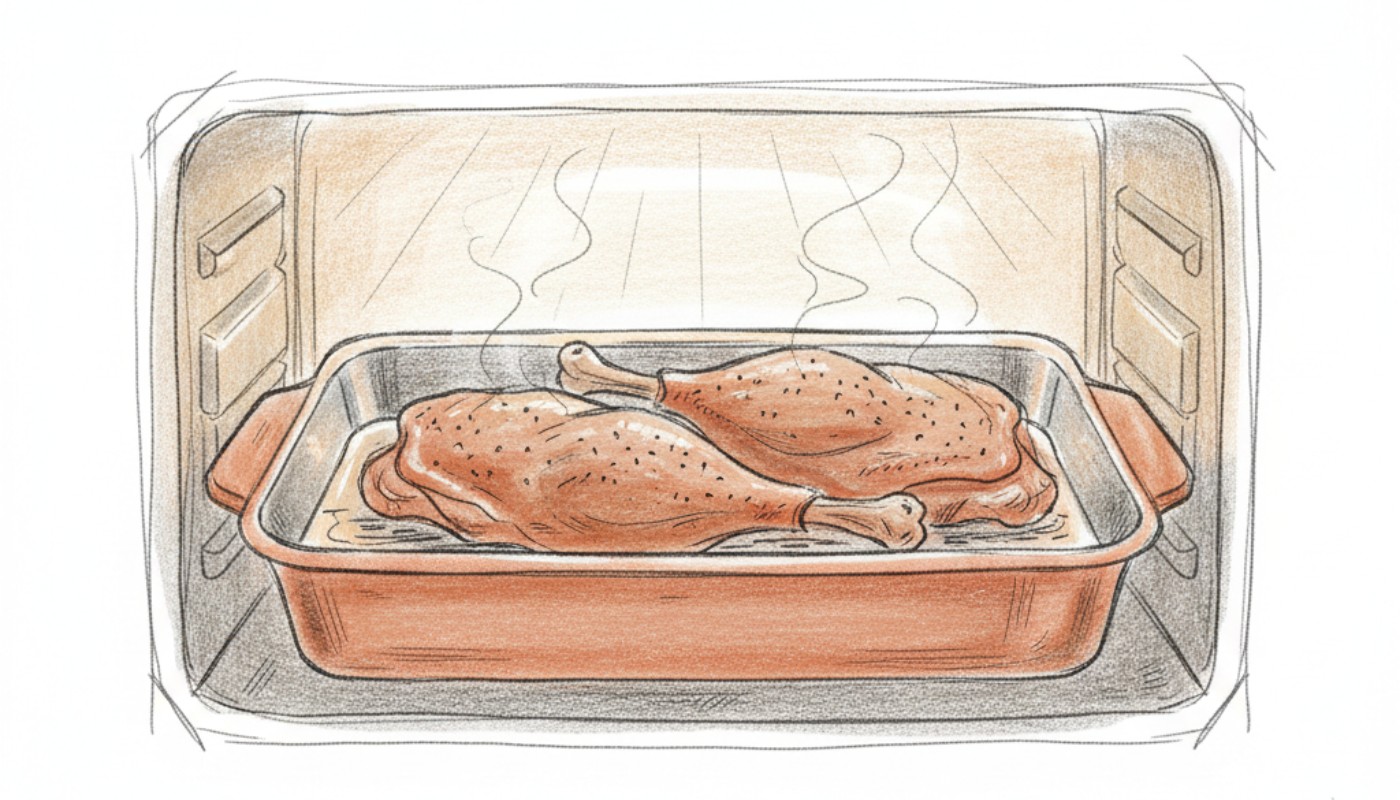
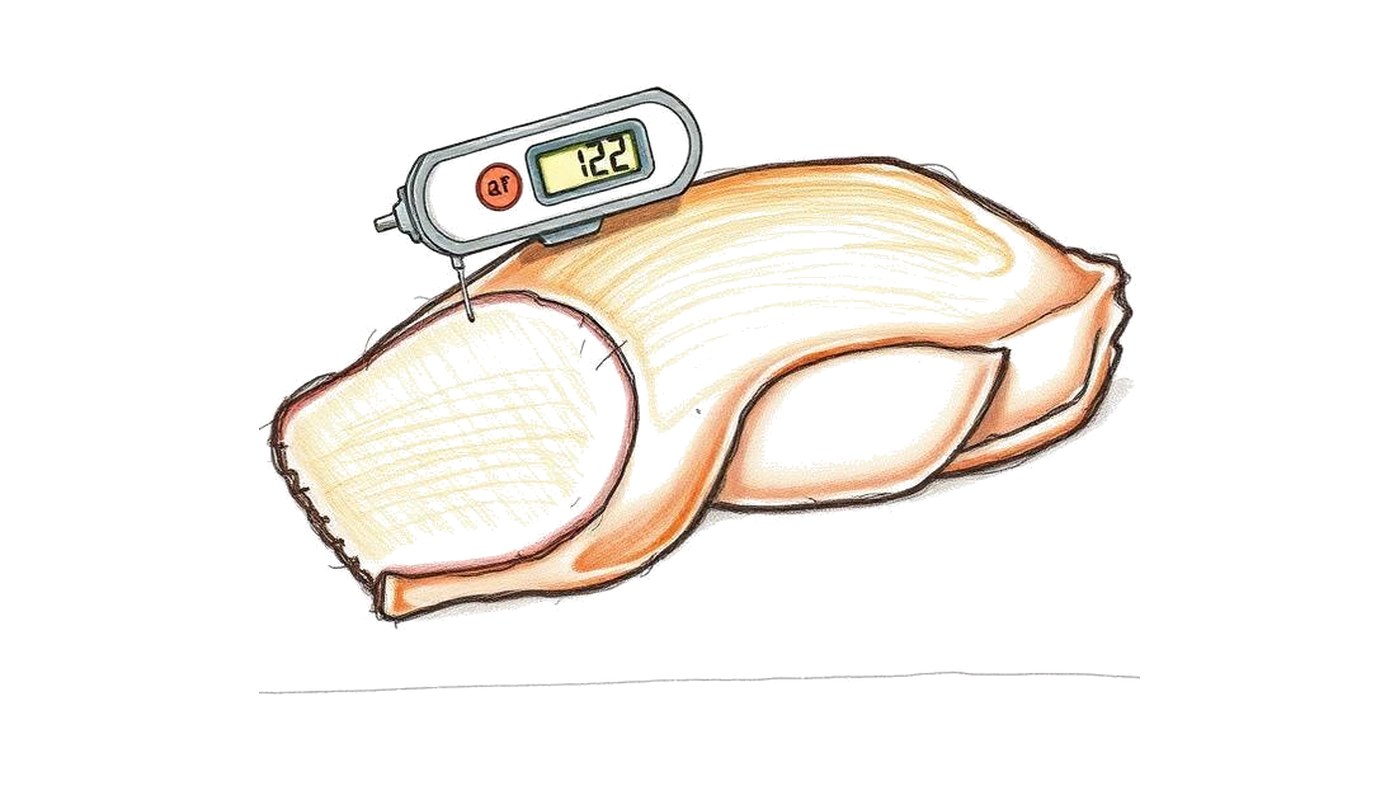
A 5–6 lb (2.3–2.7 kg) whole duck takes roughly 2 to 2½ hours at 325°F (163°C), or about 20–25 minutes per pound, plus a 15–20 minute rest. Time is only a planning tool: the bird is done when the thigh reads 175°F (79°C) and the skin is deep and taut.
Planning device, not a verdict
Weight-based cooking times exist so you can plan a meal backward from a serving time — they tell you roughly when to preheat, when to start checking, and when guests should arrive. They are built from averages across ovens, bird conformation and starting temperature, none of which match your kitchen exactly. Internal temperature, read with a thermometer, is the only number that tells you the bird is actually done. Treat every time below as the planning half of the job and the thermometer as the verdict.
Use the duck cooking-time planner to generate a starting estimate for your bird's exact weight, and the serving calculator to work out how large a bird you need in the first place.
Planning ranges by weight and oven temperature
The ranges below assume a fridge-cold, unstuffed bird roasted breast-side up on a rack. If you are still deciding what to roast it in, the roasting pan guide covers sizing and fat capacity. They are wide on purpose — real ovens, real birds and real thermometers disagree more than recipe cards admit.
| Weight | Low oven, 300–325°F (149–163°C) | Moderate oven, 350°F (177°C) | Hot oven, 425–450°F (218–232°C) | Verify with a thermometer |
|---|---|---|---|---|
| 1.8–2.0 kg (4–4.5 lb) | 2.5–3 hr | 2–2.5 hr | 1.25–1.5 hr | Thigh ≥165°F (73.9°C) |
| 2.3–2.7 kg (5–6 lb) | 3–3.5 hr | 2.5–3 hr | 1.5–1.75 hr | Thigh ≥165°F (73.9°C) |
| 2.9–3.2 kg (6.5–7 lb) | 3.5–4 hr | 3–3.5 hr | 1.75–2 hr | Thigh ≥165°F (73.9°C) |
A hot, uninterrupted oven roasts fastest but crisps unevenly without a low-render stage first; most whole-duck methods, including our own, combine a low stage with a hot finish rather than holding one temperature throughout. See the whole roast duck guide for that sequencing.
Oven calibration and convection variance
Most home ovens run 15–25°F (8–14°C) off their dial setting, and that error is rarely consistent across the whole cavity — the back or top can run noticeably hotter than the front or bottom. An oven thermometer left on the rack for a week of normal use will tell you more about your actual oven than any online calculator can. Convection (fan) ovens typically shave 15–20% off standard roasting times and produce more even browning; if your recipe or the ranges above assume a conventional oven, start checking a convection roast noticeably earlier.
Fridge-cold vs tempered starts
A duck taken straight from the fridge takes longer to come up to temperature than one rested at room temperature for 30–45 minutes first, and the difference can be 15–20 minutes over a full roast. Food-safety guidance limits how long raw poultry should sit out of refrigeration, so "tempering" a duck means a short counter rest before it goes in the oven, not an extended one — keep it under an hour and go straight into a hot oven afterward.
Why stuffing complicates doneness
Filling the cavity with stuffing, fruit or aromatics adds mass that has to come up to a safe temperature along with the bird, and it slows heat penetration to the surrounding meat because the filling insulates the cavity walls. A stuffed whole duck commonly needs 20–40 minutes longer than the unstuffed ranges above, and the stuffing itself must also reach 165°F (73.9°C) — check it with the thermometer, not just the thigh. If timing precision matters for your dinner, cook aromatics loosely and stuffing separately.
Rest time and carryover
Let a whole duck rest 15–20 minutes, loosely tented with foil, before carving. Internal temperature continues to climb by a few degrees during this window as heat equalises from the outside in, and the resting period also lets juices redistribute so slices don't run dry the moment you cut into them. Carve straight from a hot bird and you'll lose more moisture to the board than the extra few minutes of patience ever cost you.
Common questions
- Why did my duck take an hour longer than the chart said?
- The most common causes are an oven running cooler than its dial, a bird that went in fridge-cold rather than tempered, or a filled cavity. All three add real time; none of them are unusual.
- Is it safe to go by the clock alone if I trust my oven?
- No. Verify doneness with a food thermometer regardless of elapsed time, since bird size, shape and oven behavior all vary.
- Should I baste to speed things up?
- Basting doesn't meaningfully change cooking time and opening the oven repeatedly extends it slightly by dropping the internal temperature each time.
Related guides
- Duck Cooking-Time PlannerA planning range for a whole duck by weight and oven temperature.
- Whole-Duck Serving CalculatorTurn a guest count into how many birds to buy.
- Whole Roast DuckThe full workflow, from dry-fridge prep to a rested, carvable bird.
- Duck vs. Turkey for ThanksgivingThe verdict up front, then the tradeoffs nobody mentions until the oven is full.
- Duck Breast Temperature & DonenessWhat the numbers mean, and where safety guidance and kitchen practice differ.
- Roasted Whole DuckA two-stage roast that renders the fat cap, keeps the breast juicy, and gets the legs fully tender.
- Thanksgiving Duck Dinner PlanChoose your table, then order date, thaw date, oven schedule and menu — with a printable checklist.
- How to Thaw Duck SafelyFridge-first planning times, plus the cold-water fallback when you're late.
- Best Roasting Pan for DuckA rack, room for the fat, and a measured fit — the rest is preference.
- Peking Duck at HomeA home cook's route to lacquered, shatter-crisp Peking-style duck: air-dry, scald, glaze, and roast, served with pancakes, scallion and hoisin.