
Short answer
Duck is a nutrient-dense red-style poultry: roasted duck meat without skin runs about 201 calories and 23.5 g of protein per 100 g, close to a lean cut of beef. Leave the skin on and it roughly doubles the fat and lifts the same portion to about 337 calories. Duck fat itself is about half monounsaturated — closer to olive oil's profile than butter's — but it is still pure fat, so portion decides the outcome more than the fat's profile does.
The numbers, per 100 g cooked
These are reference values for roasted domesticated duck, with chicken alongside for scale. Read the two duck rows as the same bird eaten two ways.†
| Item | Calories | Protein | Fat |
|---|---|---|---|
| Duck, meat only (skin removed) | about 201 | 23.5 g | 11.2 g |
| Duck, meat with skin | about 337 | 19.0 g | 28.4 g |
| Chicken breast, meat only | about 165 | 31 g | 3.6 g |
| Chicken thigh, meat with skin | about 229 | 25 g | 13 g |
Skinless duck lands close to a lean cut of beef: solid protein, moderate fat, and more iron and zinc than any part of a chicken. Leave the skin on and the fat more than doubles. Nothing about that is dangerous — it is simply the difference between a weeknight protein and a celebration dish, and it is entirely under your control.
The skin decides almost everything
Duck stores its fat between the skin and the meat rather than marbled through it. That is unusual, and it is good news: rendering pours most of that fat into the pan, where you can keep it for later instead of eating it now. A properly rendered breast gives up a surprising amount of fat while the meat stays lean.
So there are three honest options: eat the crisp skin and count it as the indulgence it is; render hard and eat the meat with the skin left on the plate; or remove the skin before cooking and lose the best part of the bird. The first two are the good ones. How to render properly is in how to render duck fat.
Is duck fat actually better than butter?
By fatty-acid profile, duck fat sits between butter and olive oil: roughly half monounsaturated and about a third saturated by weight.† That makes it a reasonable one-for-one swap for butter in roasting and frying, and it has the higher smoke point of the two.
What it is not is a licence to use more fat. A tablespoon is about 115 calories, the same ballpark as any cooking fat. The case for duck fat is flavour and heat tolerance, not health — a distinction the duck fat versus butter and oil comparison goes into properly.
What duck gives you that chicken doesn't
Duck is a meaningful source of iron, zinc, selenium and B vitamins — particularly B12 and niacin — at levels closer to red meat than to poultry, because it is all dark muscle. For anyone eating less beef but wanting the iron, duck is a genuinely useful substitution.
Safety, briefly
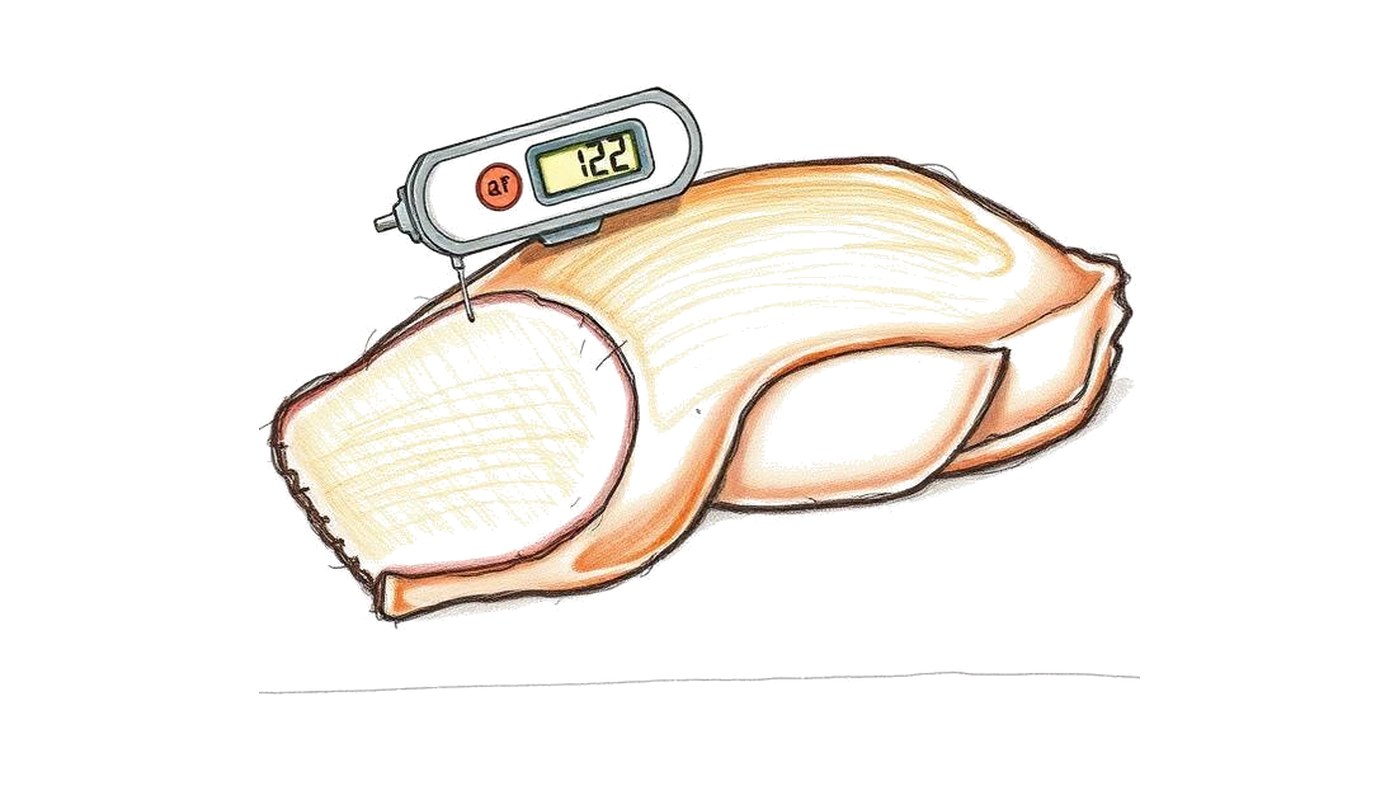
Duck is poultry, so the same handling rules apply: refrigerate below 40°F (4.4°C), thaw in the fridge rather than on the counter, and treat 165°F (74°C) as the official safe minimum internal temperature for poultry.† Restaurant practice serves duck breast rosy at 130–135°F (54–57°C); that is a considered trade-off rather than an oversight, and the doneness guide lays out both sides so you can choose deliberately.
The verdict
Duck is a nutrient-dense protein with an unusual amount of removable fat and no carbohydrate. Cooked with the fat rendered out, it is a lean, iron-rich dinner. Cooked skin-on and eaten skin-and-all, it is a rich one. Both are fine; the only version worth avoiding is the under-rendered one, which delivers the calories of the second with the pleasure of neither.
Common questions
- Is duck healthier than chicken?
- Skinless duck and skinless chicken are in the same nutritional neighbourhood: duck carries more fat and iron, chicken breast carries more protein per calorie. Neither is a health food or a problem; the skin and the cooking fat make far more difference than the species does.
- How many calories are in a duck breast?
- A 6 oz (170 g) roasted duck breast eaten without the skin is roughly 340 calories with about 40 g of protein. Eaten with the skin, expect closer to 570 calories, because the skin is where nearly all the fat sits.
- Is duck fat healthier than butter?
- Duck fat is about half monounsaturated and roughly one third saturated, so its fatty-acid profile sits between butter and olive oil. It is still 100% fat at about 115 calories per tablespoon — a reasonable swap for butter, not a reason to use more fat.
- Is duck considered red meat?
- Nutritionally it behaves like a lean red meat: all dark muscle, higher in iron and zinc than chicken. Regulators classify it as poultry, which is why the same poultry safety guidance applies.
- Can I eat duck on a low-carb or keto diet?
- Yes. Duck has no carbohydrate, and skin-on duck plus its rendered fat fits high-fat eating patterns easily. Watch the sauces instead — most classic duck sauces carry sugar.
References
- Duck, domesticated, meat only / meat and skin, cooked, roasted — USDA FoodData Central (SR Legacy)Per 100 g roasted: meat only about 201 kcal, 23.5 g protein, 11.2 g fat; meat with skin about 337 kcal, 19 g protein, 28.4 g fat.Reference checked 2026-08
- Fat, duck — USDA FoodData Central (SR Legacy)Duck fat is roughly one third saturated and about half monounsaturated by weight.Reference checked 2026-08
- Chicken, broilers or fryers, roasted — breast and thigh — USDA FoodData Central (SR Legacy)Used only for the duck-versus-chicken comparison figures per 100 g cooked.Reference checked 2026-08
- Safe Minimum Internal Temperature Chart — USDA Food Safety and Inspection ServiceAll poultry, including duck and duck pieces, is listed at a 165°F (73.9°C) safe minimum internal temperature.Reference checked 2026-08
- Refrigerator & Freezer Storage Chart — U.S. Food and Drug AdministrationCold-storage windows for raw and cooked poultry.Reference checked 2026-08
Related guides
- How to Render Duck FatFrom trim to a clean jar, plus honest storage windows.
- 15 Ways to Use Duck FatWhere duck fat beats butter or oil, and where it's just expensive.
- Duck Fat vs Butter, Olive Oil & Neutral OilA reference table for choosing the fat, not defaulting to it.
- What Does Duck Taste Like?Closer to steak than chicken — and why fat, not gaminess, drives the flavour.
- How to Cook Duck BreastThe cold-pan method, why it works, and how to rescue it when it doesn't.
- Pan-Seared Duck BreastScore, render cold, and finish hot for shatteringly crisp skin over a rosy, evenly cooked centre.
- Duck Fat Buying GuidePackaging, labels, storage — and how much you actually need.