
The short version
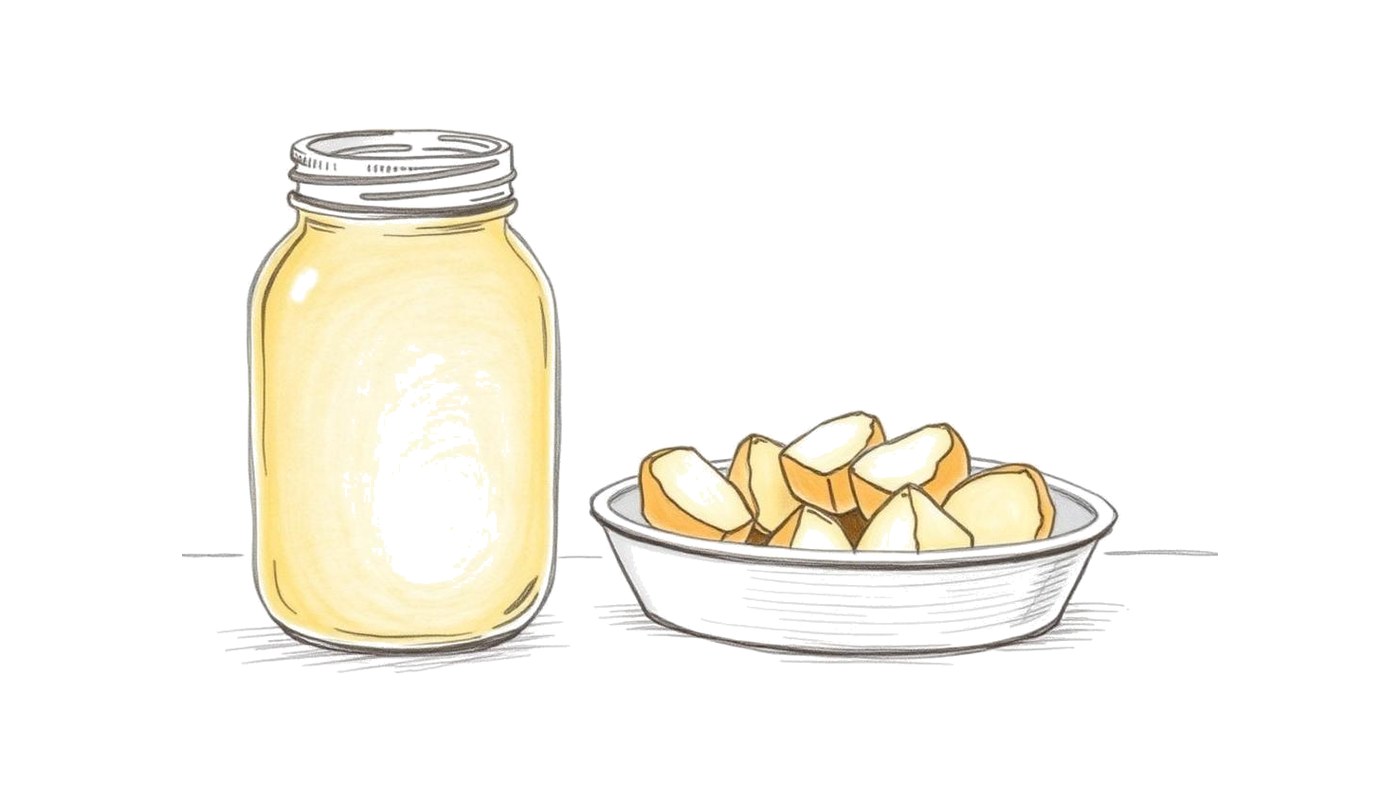
Duck fat is worth reaching for when you want savoury depth and a dry, crisp surface — roasting, frying, sautéing, confit-style cooking, and any pastry where a meaty note is welcome. It is not worth reaching for when you want a clean or bright flavour, a delicate emulsion, dairy character, or a fat that will be eaten raw and cold.
The mistake is treating it as a luxury upgrade for everything. It is a flavoured fat with a specific personality, closer in role to bacon fat or good olive oil than to a neutral cooking medium.
What makes them behave differently
Only one structural difference really matters in the kitchen: water content. Butter is not pure fat — it contains water and milk solids, which is why it foams, browns, burns, and why swapping it for a pure fat by volume changes a dough's hydration. Duck fat, lard, ghee and oils are essentially all fat.
The second difference is flavour origin. Butter's flavour comes from dairy solids, and those same solids are what brown into nuttiness and then burn. Duck fat's flavour comes from the fat itself, so it stays consistent as it heats and does not have solids to scorch. Olive oil carries peppery, grassy compounds that are volatile — much of what you pay for in a good bottle is lost when you cook it hard.
| Fat | Flavour | Water content | Browning behaviour | Where it wins |
|---|---|---|---|---|
| Duck fat | Savoury, rounded, faintly meaty; not gamey | Essentially none | Browns food cleanly; no solids to burn | Roast potatoes and root vegetables, frying, sautéing, confit, savoury pastry |
| Butter | Dairy-sweet, nutty when browned | Significant | Foams, browns, then burns from the milk solids | Pan sauces, finishing, laminated and cake pastry, anything where dairy is the flavour |
| Extra virgin olive oil | Peppery, grassy, sometimes bitter | None | Fine at moderate heat; its aromatics degrade with hard heat | Dressings, moderate sautéing, Mediterranean flavour direction |
| Neutral oil (sunflower, canola, groundnut) | Almost none by design | None | Very tolerant of high heat | Deep frying, high-heat searing, any dish where you want no added flavour |
Use-case by use-case
Roast potatoes and root vegetables. This is duck fat's strongest case. It coats well, holds heat, produces a dry crisp exterior, and adds savoury flavour that no oil matches. Butter would burn over a long roast; olive oil's character is largely lost.
Searing and sautéing. Duck fat performs well and adds flavour. But if you are cooking a duck breast, you do not need any added fat at all — the breast renders its own, and adding fat at the start slows rendering. Start dry and cold; see the duck breast guide.
Pan sauces. Butter usually wins, because emulsified butter gives a sauce gloss and body that a pure fat does not. Duck fat can enrich a sauce, but it will not give you that finishing shine. Sauce-building is covered in the duck sauce guide.
Pastry. Duck fat makes excellent savoury shortcrust and gives a tender, rich result with a mild meatiness. It is a poor choice for laminated doughs, where butter's water content generates the steam that creates layers, and for sweet baking, where the flavour reads oddly. Because of the water difference, do not swap by volume — use the duck fat substitution calculator.
Frying. Duck fat fries beautifully and is traditional for potatoes. For large volumes it is expensive and, if you are frying frequently at high heat, a refined neutral oil is more economical and more heat-tolerant.
Confit and slow cooking in fat. Duck fat is the point, not a substitute — the method depends on submerging the meat in it. See the confit guide.
Cold and raw applications. Duck fat is solid and waxy when cold, so it is wrong for dressings and vinaigrettes. Olive oil owns that space.
Cost, waste and the case for rendering your own
Bought duck fat is expensive per unit compared with neutral oil, which is exactly why the reuse logic matters. Duck fat you rendered yourself from trimmings, skin, or the tray under a roast is effectively free, and it is the same product. One whole roast duck typically yields enough fat for several rounds of roast potatoes.
That changes the economics of the comparison entirely: the honest recommendation is to buy duck fat once to see whether you like it, then render and keep your own from every bird you cook. Strain it while warm, keep it refrigerated in a clean sealed jar, and top it up. Details in the rendering guide and what to do with duck fat.
If you do want to buy rather than render — worth it if you cook potatoes in it often and do not roast whole birds — the duck fat buying guide covers what to look for and where it is normally sold.
A one-line decision rule
Ask what the fat is doing. If it is a cooking medium whose flavour you want in the finished dish, duck fat is a strong choice. If it is a carrier for something else's flavour, use neutral oil. If the dish's character is dairy, use butter. If the dish is bright, raw or Mediterranean, use olive oil.
So which fat do you buy?
The comparison above answers what to cook with. This is the shopping version of the same answer.
You have trim, skin or a roasting tray
Render it yourself
Fat off a bird you already cooked is the same product as a tub, for the price of about an hour of low heat and careful straining.
How to render duck fatYou want it ready, or you need a lot of it
Buy it rendered
Worth it if you roast potatoes in it often and don't cook whole birds. Buy the smallest format that covers a few uses, and see whether you reach for it.
Duck fat buying guideThe dish doesn't hang on duck flavour
Use another fat
Dairy character, a bright dressing, or sustained deep frying all point somewhere else. The calculator handles the swap where water content matters.
Work out the swap
Common questions
- Can I swap duck fat for butter one-for-one?
- Not by volume in baking, because butter contains water and milk solids while duck fat is almost entirely fat. In a pan, roasting tray or fryer the swap is straightforward. For pastry and baked goods use the substitution calculator, which handles the water difference.
- Is duck fat better for roast potatoes than oil?
- It tastes different rather than strictly better, and the difference is real: duck fat gives a savoury, faintly meaty flavour that oil cannot. For crispness alone, a good high-heat oil performs well. Most people who switch do it for flavour.
- Can I reuse duck fat?
- Yes, and that is much of its value — fat rendered from a roast or strained after frying can be kept refrigerated and used again. Strain out solids, since food debris is what makes any reused fat deteriorate and taste stale.
Related guides
- Duck-Fat Substitution CalculatorSwap butter or oil for duck fat across tbsp, cups and grams.
- How to Render Duck FatFrom trim to a clean jar, plus honest storage windows.
- 15 Ways to Use Duck FatWhere duck fat beats butter or oil, and where it's just expensive.
- Duck Fat Buying GuidePackaging, labels, storage — and how much you actually need.
- The Best Acids for DuckWhy acid does more for duck than any other seasoning decision.
- Is Duck Healthy?The real numbers for skin-on and skin-off duck, and how duck fat actually compares.