
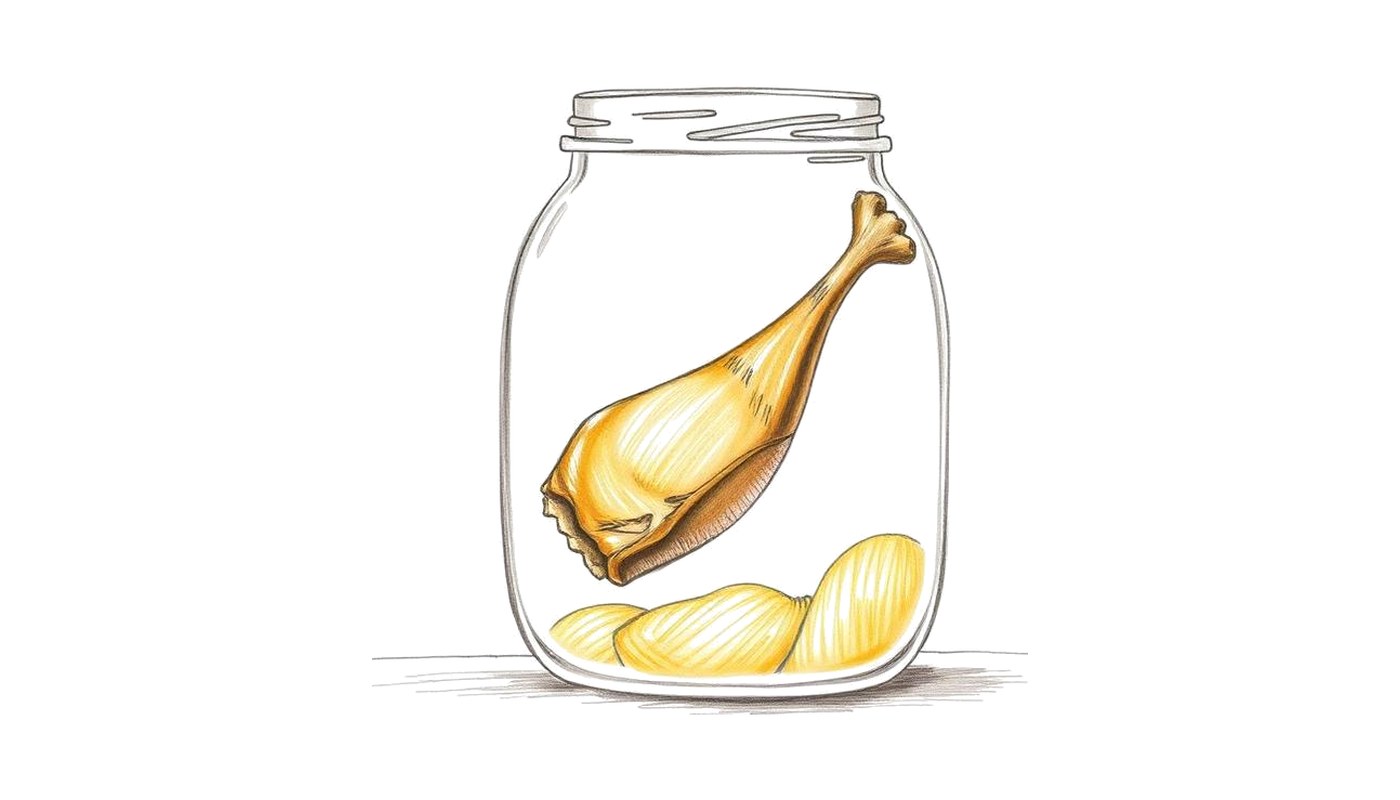
The best pot for duck confit is the snuggest one you own that also has a lid, a nonreactive interior, and enough depth to keep the legs under fat. Fit is the whole decision. A vessel that holds the legs in one tight layer needs dramatically less rendered fat than a wide pot, and a crowded or stacked vessel cooks unevenly because the legs on top spend the cook only half-submerged.
So before you shop: lay your cured legs flat in the pot you already have. If they sit in a single layer without overlapping, and there is still wall above them to hold fat, you are done — buy fat instead of hardware.
Updated
The short answer
- You already own a lidded, oven-safe pot your legs fit in one layer
- Use what you ownIf the legs sit snugly with room for fat over the top and the interior is nonreactive, the vessel question is already answered.
- You want one vessel that also handles braises and bread
- Enameled cast-iron Dutch ovenHigh thermal mass rides out oven swings, and the enamel interior is nonreactive for the salt and aromatics in a cure.
- You want something you can lift safely when it's full of hot fat
- Stainless Dutch oven or deep covered sauté panMuch lighter for the same capacity, which matters more than it sounds when you're moving hot fat.
- You only ever confit in the oven and want to store it in the same dish
- Covered ceramic casseroleOven-only by design, but a snug ceramic dish keeps legs under fat and goes straight to the fridge.
How we made these calls
We compare vessel categories on the one thing confit actually cares about: whether your legs sit in a snug single layer, stay submerged, and hold a low oven steadily under a lid. Fit comes first, material second, and brand not at all.
What this is based on
- What the confit method itself demands: legs in one layer, fat covering them for the whole cook, a lid, and a low, stable oven.
- Material heat behaviour — thermal mass, how evenly a vessel holds a low temperature, and whether the interior is nonreactive.
- Manufacturer-published practicalities for each material class: oven-safe limits, lid fit, stovetop and induction compatibility, and care instructions.
- Food-safety temperature and storage requirements from our own confit and storage pages.
Evaluation basis. The requirements of the confit method itself, material heat behaviour, and manufacturer-published oven-safe limits and care instructions — compared at the level of vessel category rather than by product or brand.
Why fit decides everything
Confit works because the legs stay covered. Fat is the seal and the medium; the moment a leg breaks the surface it starts to dry and colour instead of cooking gently. Two things break that seal: a vessel wide enough that the fat spreads into a shallow pool, and a vessel small enough that the legs have to be stacked.
Width is the expensive mistake. Every extra inch of floor area has to be filled with rendered fat before the fat level even reaches the top of the legs, so an oversized pot can easily double what you buy or render. Depth is the cheap insurance: you want the legs covered with a little headroom, not a pot filled to the rim.
| Vessel | What happens | What it costs you |
|---|---|---|
| Snug single layer | Legs stay covered with the least fat, and the fat temperature stays even around them | Nothing — this is the target |
| Too wide | Fat spreads out; you keep topping up to reach the top of the legs | Fat you did not need to buy, and a longer warm-up |
| Too small / stacked | Upper legs sit proud of the fat and cook in air rather than fat | Uneven texture, dry patches, and awkward turning mid-cook |
| Too shallow | Little headroom above the legs, so the fat creeps close to the rim | Spills, and a harder pot to move safely |
Measure before you buy
Five minutes with the legs and the pot answers this better than any spec sheet.
- Lay the legs flat in the vessel, as they will actually cook. They should touch but not overlap.
- Check the wall above them. You want room for fat to cover the legs plus a margin, not a pot filled level with the rim.
- Confirm the interior is nonreactive — enamel, stainless or glazed ceramic — because the cure is salty and often carries citrus or wine.
- Confirm a lid that seats properly. Foil is a workable stand-in; a loose lid is not a reason to buy a new pot.
- Check the maker's stated oven-safe temperature, including the lid and any knob or handle, against the low oven you plan to use.
- Lift it empty, then imagine it full of hot fat. If that is not a movement you can make calmly, choose a lighter vessel or a smaller batch.
- If you plan to warm the fat on the stovetop first, confirm the vessel is rated for your hob — including induction, which needs a magnetic base.
Working out how much fat that vessel will take? Rendering your own and the duck-fat buying guide cover the formats and quantities.
How the vessel changes the cook
Fat volume
Narrow and deep is cheaper to fill than wide and shallow, for the same number of legs. This is the single biggest practical difference between two pots that both "work".
Even submersion
One layer means every leg meets the same fat at the same temperature. Stack them and the top layer cooks differently, which shows up as texture you cannot fix later.
Temperature stability
Confit is a long, low cook, so the vessel's thermal mass matters more than its responsiveness. Heavy enameled cast iron rides out an oven cycling around its setpoint; lighter stainless follows the oven more closely, which is fine as long as you are measuring the fat rather than trusting the dial. The safety target is the meat temperature: poultry is safe at a minimum internal 165°F (74°C)†, even though the fat around it never simmers.
Safe handling
You will move this vessel while it holds a litre or more of hot fat. Loop handles you can grip with two mitts, a lid that stays put, and a weight you can control matter more than any finish. Plan where the pot is going to land before you lift it.
Cooling and storage
Legs keep best submerged in their fat under refrigeration, so a vessel you can cover and put straight in the fridge saves a transfer. Cool it promptly rather than leaving it on the counter, and keep cooked confit refrigerated† — see the storage section of the confit method for the windows.
The decision matrix
Four vessel categories against the things that actually change your cook. Nothing here is a ranking — the rows are the questions to ask of the pot in front of you.
| What you're deciding on | Enameled cast iron | Stainless / deep sauté | Covered ceramic | Oversized stockpot |
|---|---|---|---|---|
| Heat behaviour | High thermal mass; holds a low oven very steadily | Lower mass, quicker to respond; steady enough in a low oven | Holds heat well once up; slow to change | Whatever the pot does — but the legs are the problem, not the metal |
| Fit for the legs | Wide range of shapes; choose the one your legs fill in one layer | Sauté shapes are often the snuggest single-layer fit | Rectangular and oval dishes can fit legs tightly | Too wide — legs spread out or end up stacked |
| Depth for the fat | Deep enough to cover legs with headroom | Deep versions fine; shallow pans leave too little headroom | Check depth carefully — many dishes are shallow | Deep, but you'll fill the extra depth with fat you didn't need |
| Nonreactive interior | Yes, enamel | Yes, stainless | Yes, glazed ceramic | Depends on the material |
| Lid | Heavy, well-seated lid included | Usually included; check it seats properly | Often included; foil is a workable stand-in | Usually included |
| Weight when full | Heaviest — plan how you'll move it | Lightest of the three real options | Moderate, and often awkward to grip | Heavy and unwieldy for the amount of food inside |
| Stovetop compatibility | Yes, including induction on most | Yes; check the base for induction | No — oven only | Yes |
| Cleaning | Soak and wash by hand; enamel chips if knocked | Easiest; usually dishwasher tolerant | Hand wash; glaze scratches | Easy, and unnecessary |
| Best use | Confit plus braises and stews all year | Confit where handling and cleaning matter most | Oven-only confit you store in the same dish | Stock, not confit |
Who each option is for
Listed in no particular order. We don't rank these, because the right answer changes with how you cook rather than with any score we could assign.
Enameled cast-iron Dutch oven
Good fit: Cooks who want one heavy, lidded, nonreactive vessel for confit, braises, and stews.
Not for: Anyone who struggles to lift a heavy pot full of hot fat, or who wants the cheapest route.
Stainless Dutch oven / deep covered sauté pan
Good fit: Cooks who value weight, a fast stovetop response for the initial warm-up, and easy cleaning.
Not for: Cooks who want maximum temperature stability from thermal mass alone.
Covered ceramic casserole
Good fit: Oven-only confit in a snug dish that doubles as storage.
Not for: Any stovetop step, and any use beyond the maker's stated oven-safe limit.
An oversized stockpot
Good fit: Not this cook. Keep it for stock.
Not for: Confit — the extra width costs you fat and gives you nothing back.
Common buying mistakes
- Buying the biggest pot on the shelf, then paying for fat to fill the empty space.
- Choosing a wide, shallow braiser without checking there is headroom above the legs.
- Using bare cast iron or unlined aluminium with a salty, sometimes acidic cure.
- Ignoring the maker's oven-safe limit for the lid, knob or handle rather than just the body.
- Buying a vessel you cannot lift full of hot fat, which turns a calm cook into a risk.
- Replacing a pot that already fits the legs in one layer.
Evaluation basis: published specifications, manufacturer or seller documentation, and the duck-specific cooking requirements explained in this guide. Editorial standards
Shop this guide
What this guide actually asks you to own. If you already have a working version, keep it.
A snug, lidded, oven-safe vessel
The only piece of equipment confit genuinely requires. If yours fits the legs in one layer, you are set.
See the confit methodEnough rendered duck fat to cover the legs
Your vessel's width decides the volume, so size the fat after you have measured the pot.
Compare duck-fat formatsA thermometer you can read in the fat
Domestic ovens are least accurate at low settings; measure the fat and the meat, not the dial.
Thermometer buying guide
Cooking duck tonight? Don't guess.
Duck fat is the second thing you buy a duck for. The playbook covers rendering it cleanly and managing it while you cook. Tell us what you're cooking in the Duck Game Plan and we'll build your temperature, timing, crispy-skin and serving plan. Subscribers also get Duck the Fundamentals, the printable 28-page playbook, a short welcome series, and occasional DeliciousDuck recipes and guides.
- Rendering fat cleanly and storing what you keep
- Fat management while searing, so skin crisps instead of steaming
- Where duck fat earns its place, and where it doesn't
- A printable kitchen card with temperatures and timings
You can also read our companion article, the Duck Cooking Starter Guide, plus the temperature and doneness guide and the calculators, right now.
Common questions
- Do I need a Dutch oven to make duck confit?
- No. Any lidded, oven-safe vessel with a nonreactive interior works, as long as the legs fit in a single snug layer with enough depth to cover them in fat. A Dutch oven is popular because it does all of that and holds a low oven steadily.
- What size pot should I use for duck confit?
- Size by the legs, not by quarts. Lay the cured legs flat in the vessel you own: if they sit in one layer without overlapping and there is still an inch or two of wall above them, that is the right vessel. A pot that gives them room to spread out will just need more fat.
- Is a braiser better than a Dutch oven for confit?
- A braiser is wide and shallow, which is excellent for a single snug layer but can leave too little headroom for fat above the legs. Check the depth against the legs you are actually cooking before committing.
- Can I use a ceramic baking dish for confit?
- Yes for oven-only cooking, if the dish is snug, deep enough, and used within the manufacturer's stated oven-safe limit. Cover it with its own lid or with foil, and keep it off the stovetop.
- Does the vessel material change the flavour?
- Not meaningfully, as long as the interior is nonreactive. Enamel, stainless and glazed ceramic all leave the cure and the fat alone; bare cast iron and unlined aluminium are the ones to avoid with a salty, sometimes acidic cure.
References
- Safe Minimum Internal Temperature Chart — USDA Food Safety and Inspection ServiceAll poultry, including duck and duck pieces, is listed at a 165°F (73.9°C) safe minimum internal temperature.Reference checked 2026-08
- Leftovers and Food Safety — USDA Food Safety and Inspection ServiceCooked poultry keeps 3–4 days refrigerated; reheat to 165°F.Reference checked 2026-08
- Refrigerator & Freezer Storage Chart — U.S. Food and Drug AdministrationCold-storage windows for raw and cooked poultry.Reference checked 2026-08
Related guides
- Duck Leg ConfitCure, poach, chill, crisp — and the storage rules people get wrong.
- Duck Fat Buying GuidePackaging, labels, storage — and how much you actually need.
- How to Render Duck FatFrom trim to a clean jar, plus honest storage windows.
- Best Thermometer for DuckInstant-read or leave-in? Match the tool to how you cook duck.
- 15 Ways to Use Duck FatWhere duck fat beats butter or oil, and where it's just expensive.
- Duck Leg ConfitSalt-cured legs poached slowly in their own fat, then crisped to order — the most forgiving duck there is.