
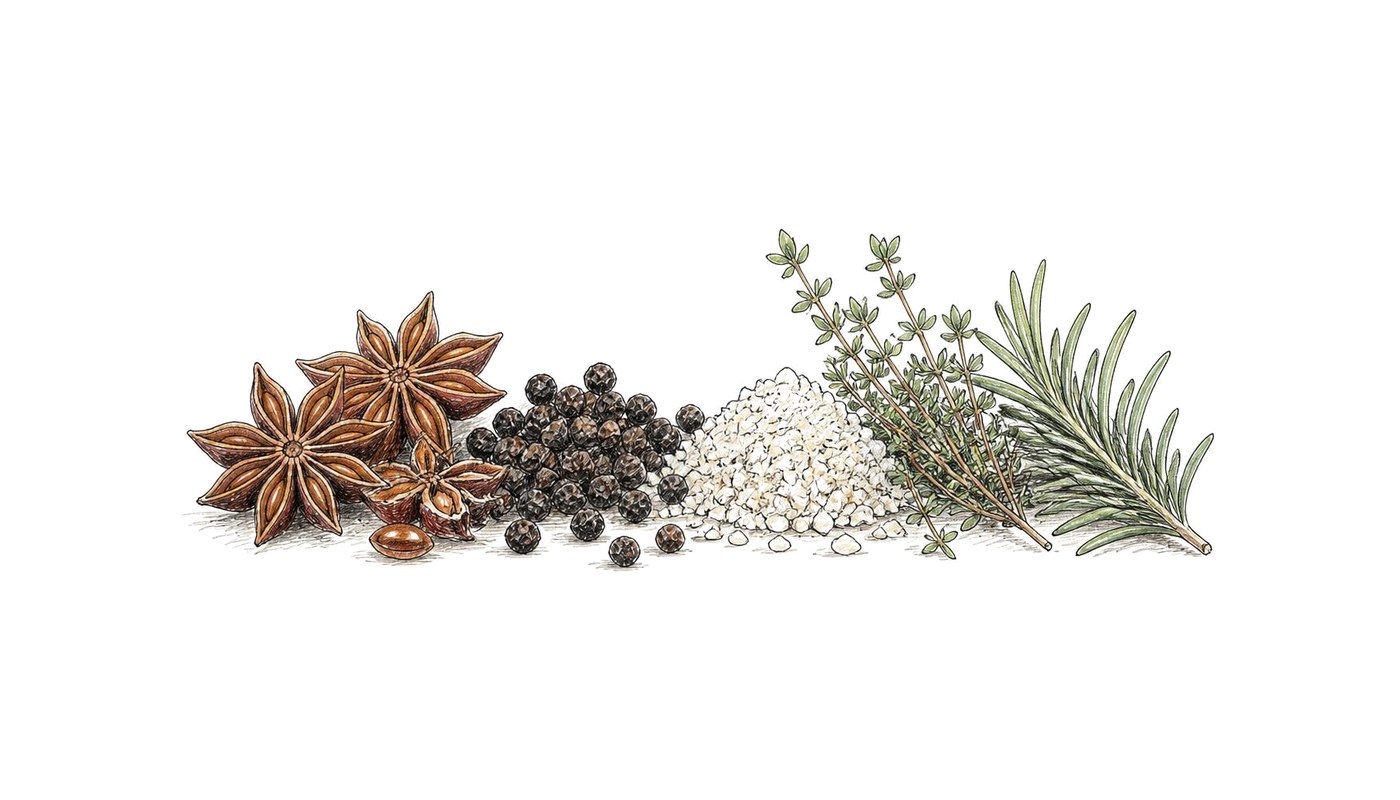
Seasoning duck is six different decisions, not one
Most seasoning confusion comes from treating "season the duck" as a single step. In practice there are six distinct layers, each with its own purpose and its own timing. Choosing two or three of them deliberately produces a better result than piling on all six.
| Layer | What it is for | When it goes on |
|---|---|---|
| Surface seasoning | Basic salt and pepper on the outside; the minimum viable seasoning | Just before cooking |
| Dry brine | Seasons deeper into the meat and dries the skin surface | Hours to a day ahead, uncovered in the fridge |
| Cure-style seasoning | Salt plus aromatics for confit and smoked duck; firms texture and perfumes throughout | Overnight or longer, per the method's own guidance |
| Finishing salt | Texture and a bright hit of salinity on the cut surface | After resting, at the moment of serving |
| Glaze | Colour, gloss and sweetness on skin | Final stretch of cooking only |
| Aromatic rub | Flavour direction — herbs, warm spice, pepper | With the salt if dry, or on the flesh side only if oily |
Salt is the decision that matters most
Everything else on this page is optional; salt is not. Duck's dark muscle needs more seasoning than white poultry meat to taste fully seasoned rather than merely rich, and under-salted duck reads as flat and greasy even when the cooking was perfect.
Two practical points. First, salt by weight rather than by spoon if you can — salt crystal sizes vary enormously between fine sea salt, kosher flakes and coarse rock salt, so a "teaspoon" is not a stable unit. Second, remember that a whole duck has a lot of skin and fat that will render away, and seasoning that sits only on the skin largely leaves with the fat. Get salt onto flesh where you can.
Timing: why the skin needs to be dry
Browning and crisping cannot begin in earnest while there is free water on the surface — the energy goes into evaporating that water instead. Salt initially draws moisture out of the meat and onto the surface, then, given time, that brine is reabsorbed and the surface dries out again, especially in the moving air of a fridge.
That gives you two good windows and one bad one: salt well ahead and let the surface dry, or salt immediately before cooking and pat the skin thoroughly dry first. The window to avoid is a short wait of a few minutes to an hour, where you have wet skin and no reabsorption benefit. For the full mechanics of dry-drying and cut-by-cut planning ranges, see the dry brine guide.
Why wet rubs and pastes sabotage crisp skin
An oil- or liquid-bound paste does three unhelpful things to skin. It adds water that must be driven off before browning starts; it adds a layer that insulates the skin from direct contact with the hot pan or oven air; and if it contains sugar, garlic or ground paprika, those solids sit in rendering fat at high heat and scorch long before the skin is properly rendered.
The fix is not to abandon the flavour but to move it. Put pastes and marinades on the flesh side, into the cavity, or into the sauce; keep the skin side to dry salt and, if you like, dry spice. If a recipe genuinely requires a wet coat on the skin, accept that you are trading crispness for flavour, and choose knowingly. For diagnosis when skin has already gone wrong, see why duck skin won't crisp.
Cure-style seasoning versus ordinary seasoning
Confit and smoked duck use salt differently: not just to season but to firm the texture and season all the way through over a long contact time, usually with aromatics like thyme, bay, garlic and peppercorn in the salt. That is a method-specific process, and the salt quantity and contact time belong to the method rather than to general seasoning practice — follow the confit guide rather than improvising ratios.
The practical distinction to hold onto: ordinary seasoning is forgiving and reversible in effect; a cure is a process with a duration, and over-curing produces meat that is genuinely too salty to serve. Weigh your salt for cures.
Glazes and finishing salt
A glaze — honey, maple, hoisin, fruit reduction — belongs in the last part of the cook, and it needs watching. Applied at the start of a whole-duck roast it will be dark and bitter long before the bird is finished. Applied in the final stretch, it sets into gloss.
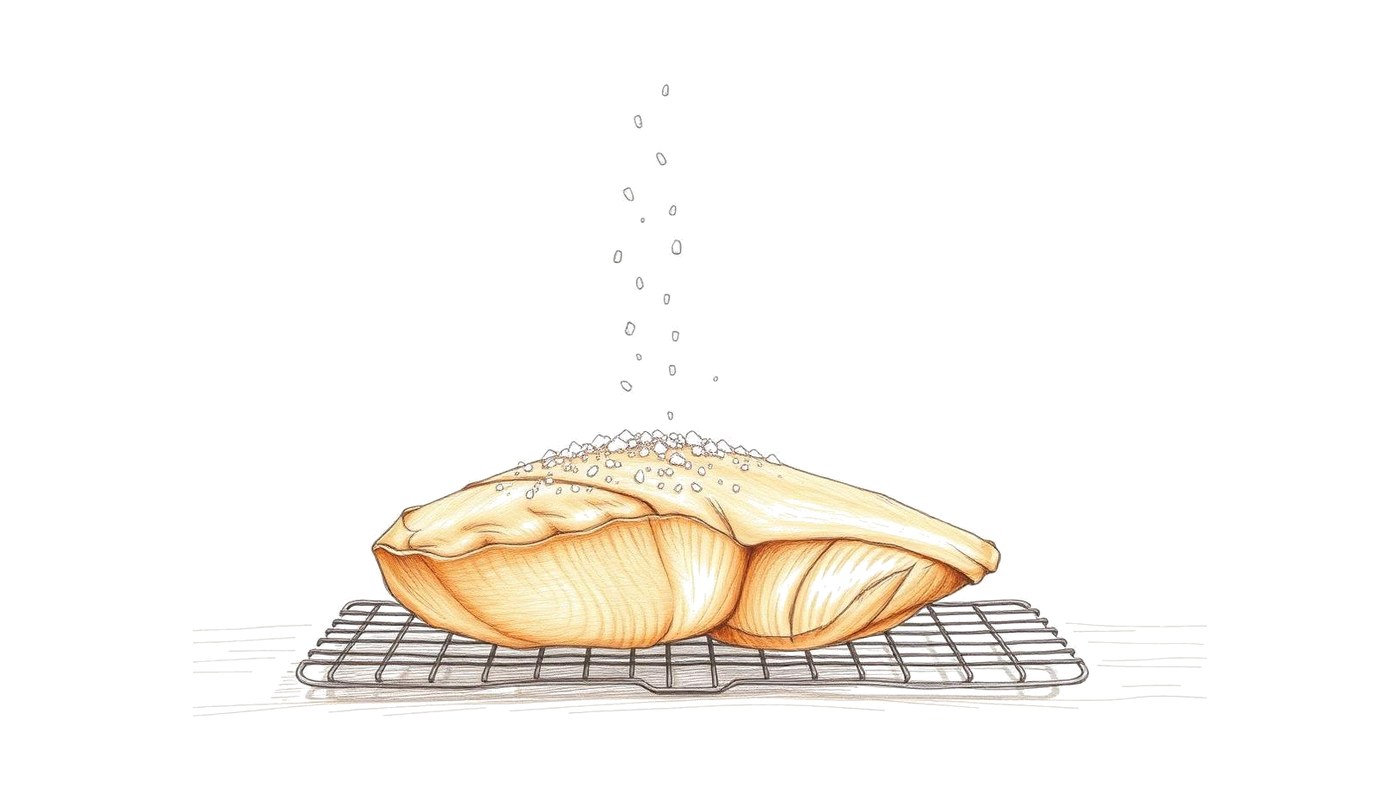
Finishing salt is the cheapest upgrade available. A flaky salt scattered on sliced duck after resting gives crunch and an immediate hit of salinity that seasoning inside the meat cannot replicate. Do it after slicing, not before, or it dissolves and disappears.
A default order of operations
For a duck breast: pat dry, salt both sides, rest uncovered in the fridge, cook from a cold pan, pepper and finishing salt after resting, sauce on the plate rather than over the skin. For a whole bird: dry, salt inside and out, aromatics in the cavity, uncovered fridge time, roast, glaze late if using, rest, carve, finishing salt. Neither list contains a wet rub, and neither needs one.
Where sauce goes matters as much as seasoning: pool it under or beside the duck rather than over the skin, so the surface you worked for stays crisp until it is eaten. The whole roast duck guide and the scoring guide cover the mechanical side of the same goal.
Common questions
- Should I salt duck the day before or just before cooking?
- Both work, but they do different things. Salting well ahead and leaving the duck uncovered in the fridge seasons deeper and dries the skin surface, which helps browning. Salting immediately before cooking seasons the surface only and leaves more moisture on the skin. What you should avoid is the middle ground of salting ten minutes ahead, where salt has drawn moisture to the surface but has not had time to be reabsorbed.
- Do I need to season under the skin?
- On a whole bird it is worth loosening the skin over the breast and salting the flesh directly, because salt does not travel through a thick fat layer quickly. On a duck breast, salting the flesh side and the skin side separately achieves the same thing with less handling.
- Does sugar in a rub help the skin brown?
- It browns faster, which is not the same as better. Duck renders a lot of fat over a long cook, and sugar sitting in that fat can darken past the point you want well before the bird is done. Save sweet elements for a glaze applied in the final stretch, or for the sauce.
References
- Safe Minimum Internal Temperature Chart — USDA Food Safety and Inspection ServiceAll poultry, including duck and duck pieces, is listed at a 165°F (73.9°C) safe minimum internal temperature.Reference checked 2026-08
- Duck and Goose from Farm to Table — USDA Food Safety and Inspection ServiceHandling, labelling, storage and cooking guidance specific to duck and goose.Reference checked 2026-08
Related guides
- How to Dry Brine DuckSalt by weight, air on all sides, and a timing plan per cut.
- Best Herbs & Spices for DuckFive flavour families, why each suits duck fat, and where each one clashes.
- How to Score Duck BreastDepth, pattern and knife control — the 90 seconds that decide your skin.
- Why Duck Skin Won't CrispSeven symptoms, seven causes, and the fix you can still apply mid-cook.
- Whole Roast DuckThe full workflow, from dry-fridge prep to a rested, carvable bird.